


Success Story
How Rome Health’s Virtual Nursing Program Is Transforming Patient Experience
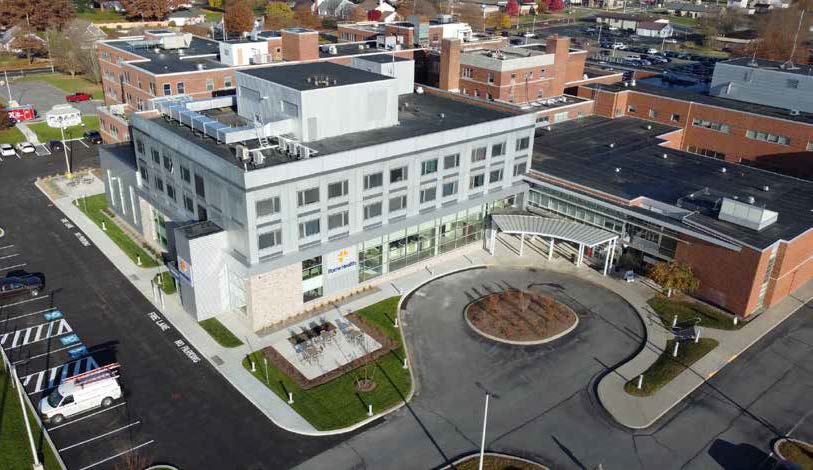

Facing rising patient acuity, workforce pressure, and growing administrative demands on bedside nurses, Rome Health set out to build a more sustainable approach to care delivery. The rural community hospital launched a focused virtual nursing program designed to reduce bedside workload, improve discharge education, support nurse retention, and strengthen the patient experience.
Starting with discharge support on its 2 East Medical-Surgical Unit, Rome Health paired hospital-employed virtual nurses with bedside teams to give patients more dedicated time for education and preparation before returning home. The program contributed to significant improvements across multiple patient experience measures, including an increase in Rome Health’s Press Ganey Discharge Information performance from the 51st percentile nationally to the 98th percentile
About Rome Health
Rome Health is a rural community hospital serving patients in Central New York. Like many community hospitals, Rome Health must balance growing patient needs and rising care complexity with limited clinical resources.
Known internally as “the little hospital that could,” Rome Health has embraced innovation as a way to protect its personal, community-centered approach to care while introducing new models that help clinical teams work more effectively.
In 2025, Rome Health launched a virtual nursing program on its 2 East Medical-Surgical Unit. The program pairs hospital-employed virtual nurses with bedside teams to improve patient education, relieve administrative burden, and create more time for direct patient care.
The Challenge
Hospitals across the country are confronting nursing shortages, rising patient acuity, administrative burden, and clinician burnout. These challenges can be especially pronounced in rural and community hospitals, where fewer staffing resources are available to absorb changing patient volumes and increasingly complex care needs.
At Rome Health, bedside nurses were balancing hands-on care with time-intensive discharge education, documentation, medication information, and care coordination. Competing priorities on the unit could make it difficult to give each patient the focused time needed to prepare confidently for the transition home. At the outset of the program, Rome Health’s Press Ganey Discharge Information domain ranked in the 51st percentile nationally.
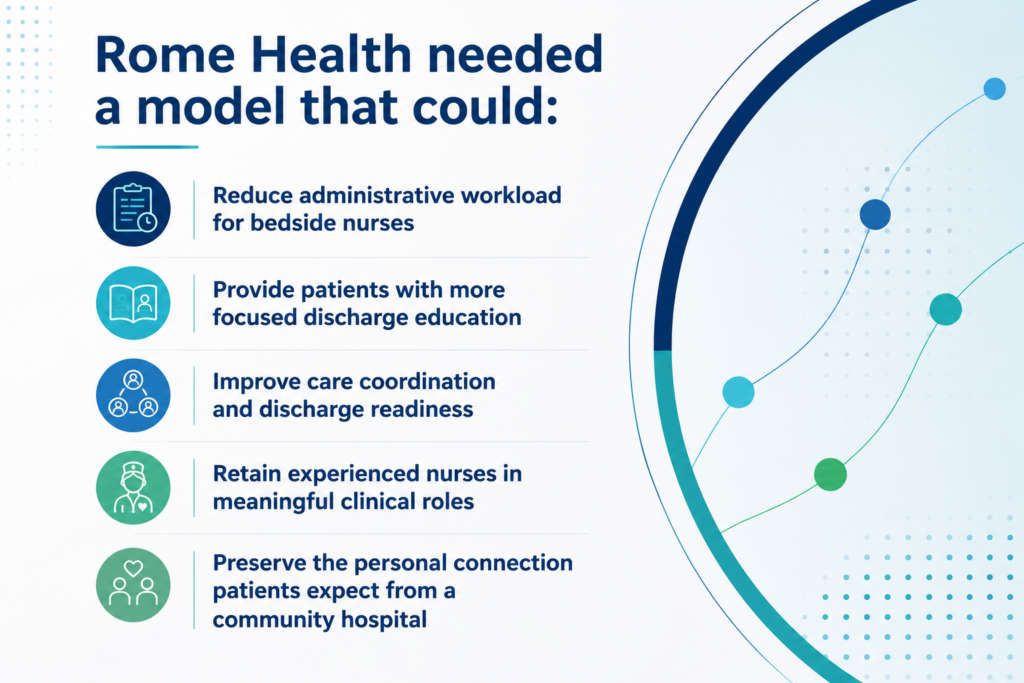
Rome Health began exploring how a virtually integrated care model could absorb some of this administrative and educational workload without replacing the personal relationship between patients and their bedside nurses.
The Solution
Rome Health implemented virtual nursing through a deliberate, phased approach. Rather than introducing multiple workflows at once, the team selected discharge support as a focused starting point where virtual nurses could create immediate value for patients and bedside staff.
Virtual nurses use secure video connections and in-room televisions to guide patients through discharge instructions, medications, follow-up care, symptoms to monitor, and available support after leaving the hospital.
Key elements of the program included:

Focused Discharge Support
Virtual nurses initially supported discharges Monday through Saturday from 7 a.m. to 7 p.m. Patients discharged during that window received dedicated education and preparation from a virtual nurse, while the bedside nurse remained responsible for primary clinical care

Centralized Virtual Nursing Hub
Experienced virtual nurses work onsite from a centralized hub near Rome Health’s 2 East Medical-Surgical Unit. The hospital equipped 38 patient rooms in planned phases and expanded the virtual nursing team systematically as adoption increased

Local, Hospital-Employed Nurses
Rome Health chose to staff the program with its own nurses rather than outsourcing virtual care. Using known and trusted team members helped strengthen collaboration between bedside and virtual nurses while preserving local relationships with patients and staff

Workflow-First Change Management
Rome Health redesigned and optimized its discharge process before adding virtual care technology. The rollout was introduced nurse by nurse and patient by patient, with leadership prioritizing personal conversations over broad policy announcements
The Outcomes
Rome Health’s virtual nursing program contributed to measurable improvements in patient communication, discharge readiness, and care coordination.
- 51st to 98th Percentile in Discharge Information
Rome Health’s Press Ganey Discharge Information performance rose from the 51st percentile nationally in the fourth quarter to the 98th percentile in March. - Improved Communication with Nurses
Patient experience scores increased from 73.58 to 94.12. - Stronger Medication Education
Communication About Medicines increased from 40.06 to 86.36, including a score of 100% for explaining new medications. - Greater Discharge Readiness
Discharge Information increased from 86.02 to 93.75, including a score of 100% for discussing help after discharge. - Better Care Coordination and Symptom Education
Care Coordination improved from 63.19 to 81.99, while Information About Symptoms increased from 55.88 to 81.88.
The impact extended beyond patient experience measures. Virtual nurses provided patients with dedicated time to ask questions and review important information without the interruptions that bedside clinicians often face. Bedside nurses gained more time for direct care, while Rome Health retained experienced nursing talent and created a foundation for broader collaboration across pharmacy, physicians, and continuum-of-care teams

“Our discharge information domain from Press Ganey, on our fourth quarter for discharge domain, was in the 51st percentile nationally.
In March, we’re at 98th percentile. Huge, huge achievement.”
– Ashley Edwards, DNP, RN, NE-BC, Chief Nursing Officer and Vice President of Clinical Services, Rome Health
What Comes Next
Rome Health continues to refine its discharge workflow while preparing to expand virtual nursing into additional areas, including admissions, medication reconciliation, interpreter services, task management, and broader care coordination.
Future plans include enabling virtual nurses to complete non-clinical admission activities that require significant time in the patient record. Rome Health is also exploring virtual medication reconciliation with pharmacy teams and interpreter access through in-room televisions.
Task management capabilities could eventually allow assignments to be routed to virtual nurses, pharmacy, continuum-of-care teams, and other departments based on patient needs. Physicians and specialists may also use the in-room technology to connect with patients when working elsewhere in the hospital.
Rome Health is measuring burnout, technology acceptance, patient satisfaction, length of stay, and other operational outcomes to demonstrate the program’s long-term value. Its goal is to expand slowly and intentionally, optimizing each workflow before introducing the next.
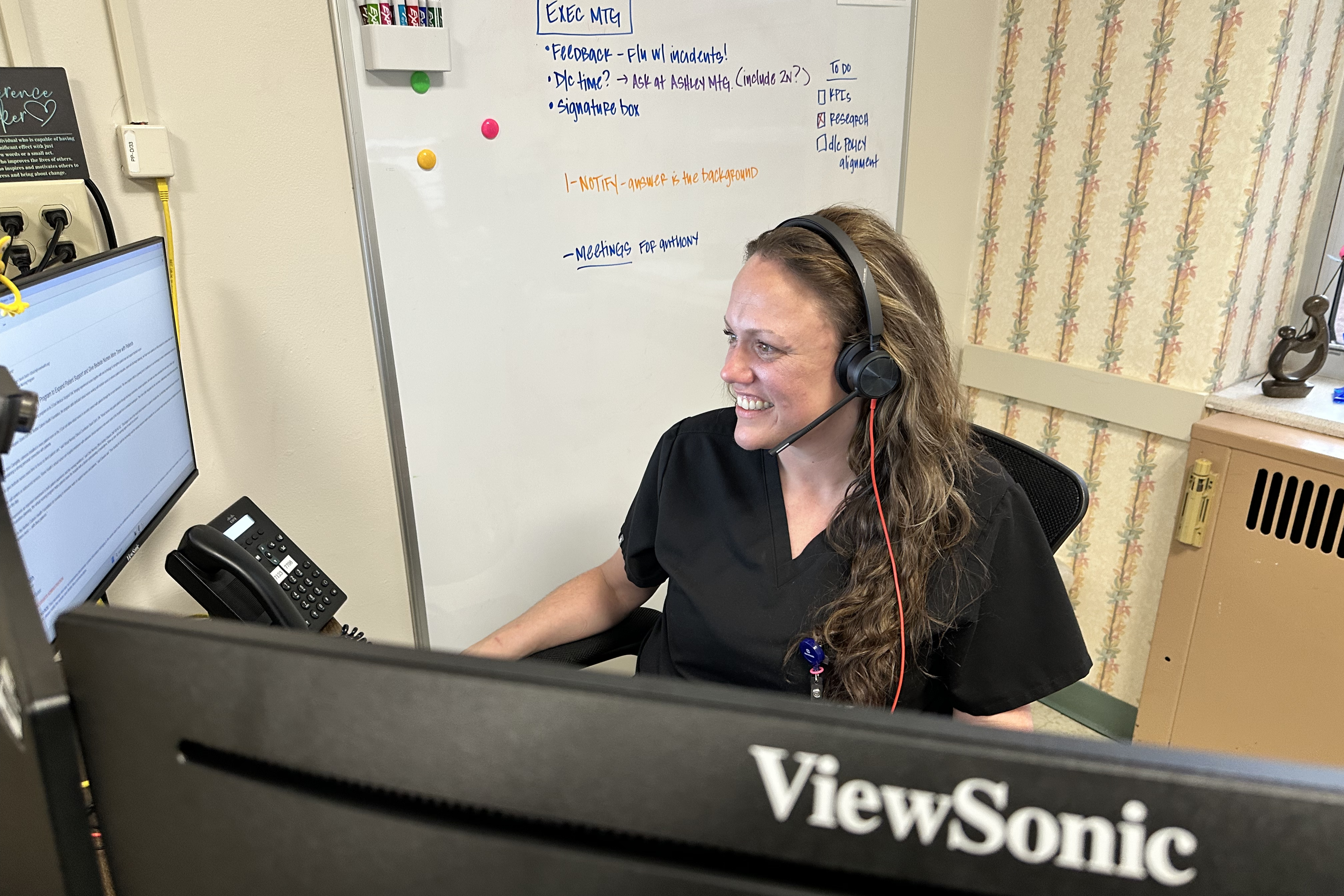
“There is so much we can do with virtual nursing. We are starting systematically, building a strong foundation, and expanding where we can make the greatest impact.”
Sarah Dutch, RN, Virtual Nursing Clinical Coordinator at Rome Health

“We need to be innovative and think of new ways to support patient care and keep our standards high.”
Ashley Edwards, DNP, RN, NE-BC, Chief Nursing Officer and Vice President of Clinical Services at Rome Health