



Author: Kedar Ganta, Chief Product, Technology, and AI Officer, Caregility
We are pleased to announce that the Caregility Connected Care™ Platform has earned Epic Toolbox certification for the second consecutive year. This continued recognition from Epic reflects our ongoing commitment to making it easier for health systems to integrate Caregility into existing clinical workflows built on Epic.

Following my January-March 2026 update, I want to share what we’ve been building across the Caregility Connected Care™ Platform this Spring.
The real value of a platform is not measured in features it delivers, but in what value it provides at the point of care. It is when a nurse can act without hesitation at 2 a.m. When care teams coordinate from a single, connected workspace. When operational issues are resolved before they reach clinicians. Our releases are designed with those moments in mind.
This quarter, we delivered two important platform releases – CARES 26.3 and CARES 26.5. Together, they expand our clinical capabilities and strengthen the platform foundation. I’ll highlight the key capabilities we’ve delivered and what’s ahead on our roadmap.
1. A More Reliable and Observable Platform
Proactive Device Intelligence
We strengthened fleet reliability by improving visibility across APS carts and wall systems. Fleet reliability is foundational. We are making it measurable.
- We have introduced Network and Battery Health Monitoring for APS cart and wall systems in Control Hub, enabling real-time insights into device connectivity and power status during standby and active use.

- Device Details pages now expose SSH enablement status for APS devices, allowing secure remote diagnostics and faster issue resolution without on-site dependency.
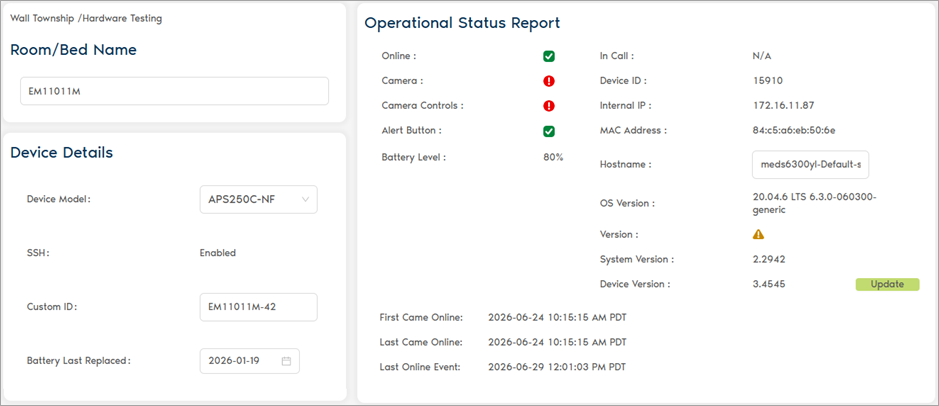
- We’ve redesigned the Device Monitoring experience for both APS (cart and wall) and APD (mobile) devices to improve operational clarity at scale. Updated layouts reduce UI friction and allow faster scanning across large fleets, improving response time and situational awareness for the operations team. When you are managing dozens or hundreds of devices across a health system, visual clarity is not cosmetic. It is operational efficiency.
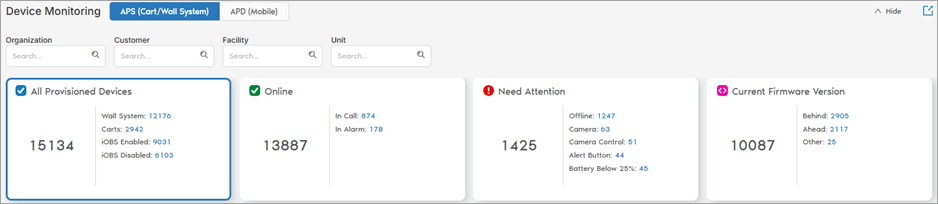
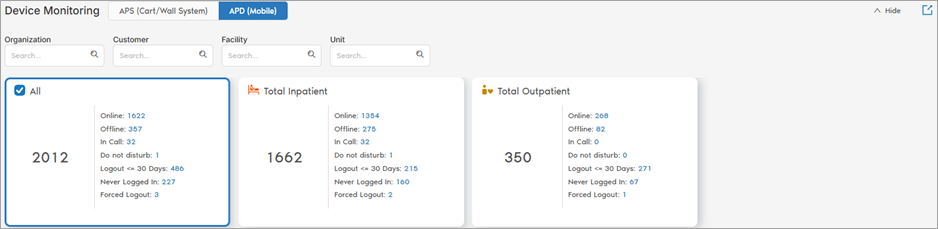
When something does need attention, resolution speed matters. These enhancements shift operations from reactive troubleshooting to proactive management.
2. Smarter Clinical and Administrative Workflows
iCare Coordinator (iCC)
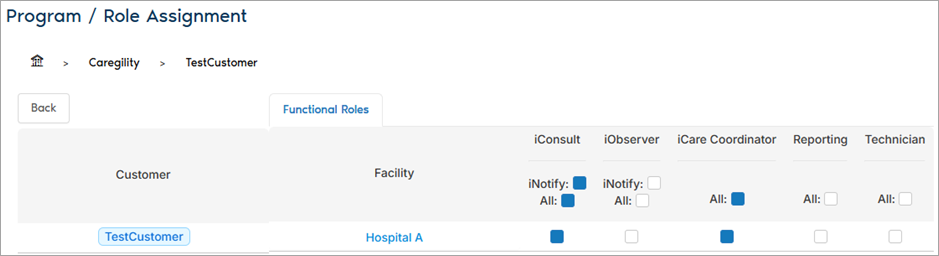
Administrative ownership is something you have asked for clearly and consistently. Admin teams can now fully manage iCC user permissions directly within Control Hub, without routing requests through Caregility. iCC is now integrated into Landing Page tiles and role-based access controls, creating a more unified and self-sufficient administrative experience across the platform.
iObserver: Reducing Friction in High Acuity Care
This quarter, we continued refining iObserver to improve responsiveness, coordination, and clinical clarity, providing greater control during patient observation.
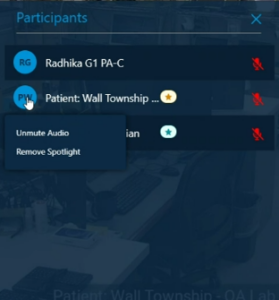
- Secondary Spotlight is now available to all session participants. Previously designed to keep patients continuously visible for ASL interpreters, the capability now gives consistent patient visibility across multi-party care, including interpreters, family members, and clinicians.
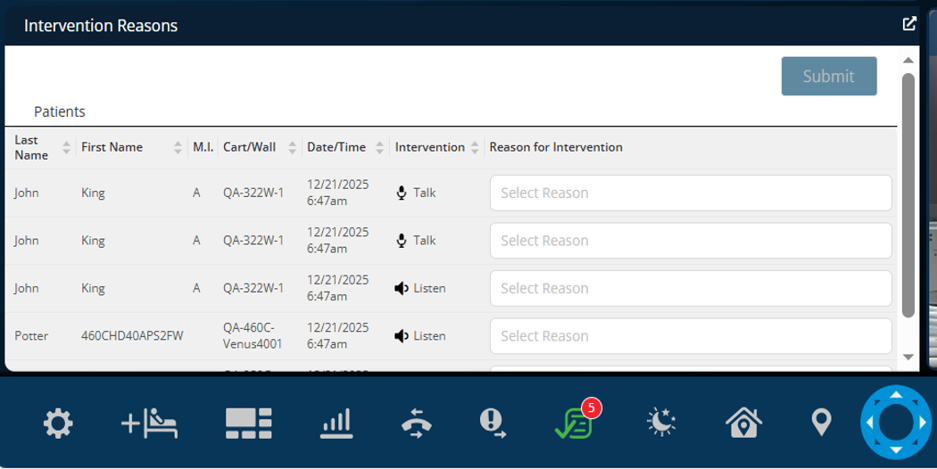
- With Intervention Queue, observers can now move between patients during active observation, capturing intervention details at the appropriate time without disrupting care. Previously, observers were required to select an intervention reason immediately after clicking Listen, Talk, or Notify, interrupting their ability to respond quickly to multiple patients. This creates a faster and more efficient workflow for organizations managing high patient volumes or rapid-response observation programs.
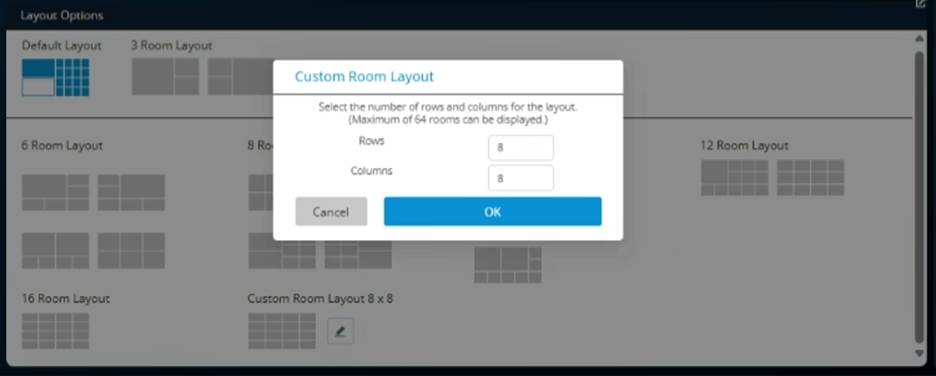
- With dynamic layout scaling, managing large patient populations is now more intuitive. When adding more than 16 patients to a custom layout, patient grids now expand incrementally beyond 16 patients instead of automatically jumping to a 64-patient view. This gives observation teams greater flexibility to build layouts that match their current census and operational needs.
- Synchronized camera allows both an observer and clinician to automatically share the active APS200 DUO 5x and 40x camera controls when both are dialed into the same session. Both users remain synchronized on the same visual context, reducing confusion during handoffs and collaborative patient assessments.
This capability has also been extended between iObserver and iConsult. Consultants now receive the observer’s active camera zoom level, ensuring they immediately orient to the same patient view. In addition, the double-click-to-center camera control has been refined, providing more precise positioning during virtual consultations.
P2P & iNotify
We streamlined virtual care interactions to reduce friction for both clinicians and patients. P2P and iNotify focus on making virtual interactions simpler, more efficient, and more reliable. From streamlining document sharing during telehealth visits to improving interpreter access and strengthening notification reliability, these enhancements reduce friction for both clinicians and patients.
- Document sharing in chat: Clinicians can now send care instructions, consent forms, educational materials, and visit summaries directly through the chat during virtual visits.
- Simplified user experience. A refreshed interface makes virtual visits easier to navigate for both clinicians and patients.
- Faster interpreter search. Improved search capabilities help care teams quickly find the right interpreter and reduce delays in patient care.
- Configurable session timeouts. Administrators can define behaviors for unattended sessions, especially what happens when a patient is waiting and a clinician has not yet joined, improving both operational efficiency and the patient experience.
Not every release is defined by new features. Sometimes the most meaningful improvements are those that make the platform more dependable every day.
In CARES 26.3, we improved iNotify by resolving issues related to time zone handling and enhancing notification export accuracy.
3. Intelligent Care at the Edge
Our strategy continues to focus on processing intelligence at the edge, keeping computation local, reducing latency, and keeping patient data on premises. This quarter, we advanced several capabilities that are generating strong interest.
- Smarter patient pose detection. Computer vision models for laying down, standing, and sitting have been refined to reduce false alerts and improve detection accuracy.
- Faster awareness of room activity. The system now responds more quickly when someone enters the room, giving care teams greater confidence in observation alerts.
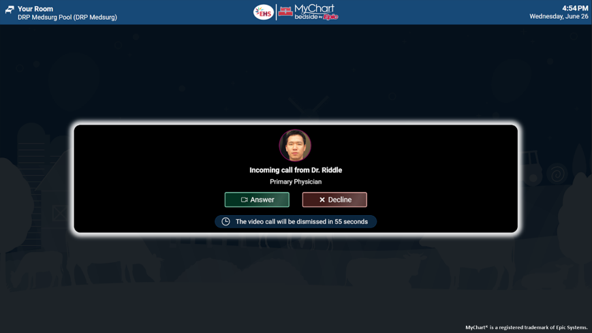
- Epic Bedside TV integration. Patients and care teams can now participate in two-way video calls directly from Epic Bedside workflows.
- More resilient connectivity. Improvements help maintain smoother operation during planned platform maintenance.
- Enhanced APS200 camera management. Automatic camera position recovery helps restore proper alignment if a camera becomes misaligned, reducing manual intervention and improving system reliability.
Looking further ahead, we are also advancing radar-based reading of patient movement and vital signs as an additional sensing layer within Augmented Observation. This modality requires no line-of-sight and extends monitoring into spaces where cameras cannot go, including privacy-sensitive areas. And in partnership with OneView, we are building a joint AI capability that produces context-aware patient communications and clinician follow-up. Watch this space.
In Conclusion
Each quarter, I return to the same question: what does the platform feel like to the person using it when it matters most?
Not in a demo environment, but during real care delivery at 2 am on a med-surg unit, during a rapid response, or at a shift handoff when every minute counts.
The updates we shipped are answers to that question.
- Visibility before failure occurs – Proactive fleet monitoring
- Coordination without unnecessary friction – From Epic Bedside TV experience to intervention queues to camera synchronization
- Intelligence at the edge of care delivery – Pose detection refinements
- And a platform that becomes more reliable with every release
Our goal is not to add complexity, but to remove it.
This is the work. Much more to come.
Thank you for your continued partnership!
Contact us to learn how the latest Caregility updates support your connected care strategy!
