Caregility Expands Careforce Ecosystem with DataSource Technology to Scale Customer Support
Partnership extends Caregility’s onsite preventive maintenance support capacity as health systems embrace inpatient virtual care and AI across complex, multi-site environments
Wall, NJ – August 31, 2026 – Caregility, a global leader in enterprise connected care and AI solutions, today announced that DataSource Technology (DST) has joined the Caregility Careforce ecosystem, teaming with Caregility to provide onsite preventive maintenance support to Caregility customers as they support an ever-expanding number of devices enabling over 73 different clinical workflows across hundreds of health systems.
As health systems scale virtual care and AI across more rooms and facilities, the reliability of installed technology becomes increasingly important. Proactive preventive maintenance, particularly with mobile carts, ensures that connected endpoints are ready for use when care teams need them, giving staff greater confidence.
The partnership adds DST’s preventive maintenance services to Caregility’s established implementation, infrastructure, rollout, and post-go-live support model. DST will support scheduled preventive maintenance activities for Caregility customers. The focused work is intended to help proactively identify device issues, support consistent endpoint performance, and reduce disruption to clinical operations.
“Caregility has earned an outstanding reputation for being responsive, reliable, and deeply invested in customer success,” said Joe Martinez, CEO at DataSource Technology. “We’re pleased to support that commitment through focused preventive maintenance services that help keep connected care technology operating reliably over time.”
DST’s field-service resources will supplement Caregility’s existing service network when additional onsite preventive maintenance support is needed, while Caregility continues to lead customer support, service coordination, and performance standards. Caregility’s service-led approach
addresses operational realities across the full program lifecycle, a meaningful differentiator as health systems move from targeted pilots to enterprise deployments.
“Our customers rely on connected care devices being ready when clinicians need them,” said Kelly McDermott, Chief Marketing and Customer Success Officer at Caregility. “Some of our devices have been in production for over 8 years, which definitely speaks to Caregility’s reliability; however, as those device fleets grow, proactive maintenance becomes even more important. DST gives us an additional resource for preventive maintenance that can help customers extend the useful life of their investment.”
Caregility currently supports more than 30,000 connected devices, enabling over ten million virtual care sessions annually across hundreds of healthcare organizations internationally. With 99.98% platform availability and consistently high customer satisfaction ratings, Caregility has built a service record its customers trust and rely on. Caregility remains focused on the reliability of the technology and services that underpin connected care. Preventive maintenance is one part of that broader commitment to helping customers protect their investments and sustain dependable clinical operations.
To learn more about Caregility’s connected care solutions and Careforce support services, visit https://caregility.com.
About DataSource Technology
DataSource Technology (DST) delivers end-to-end IT rollouts and managed services across complex, multi-site environments. Its comprehensive services span network and wireless infrastructure, system configuration, clinical hardware installation, and end-user device deployment through full lifecycle support. DST’s expertise includes program and project management, staff augmentation, structured cabling, ergonomic clinical installations, preventive maintenance, and risk-aware strategic planning. By combining technical depth with reliable onsite execution, DST extends customer teams across locations to help keep technology operations smooth, efficient, and on schedule. DST supports nationwide healthcare providers, product manufacturers, and system integrators. Learn more at https://datasource-tech.com/.
About Caregility
Caregility Corporation is a global digital health leader dedicated to connecting care for patients and clinicians everywhere through innovative, AI-assisted solutions. The Caregility Connected Care™ Platform optimizes care coordination and clinical workflow, powering Smart Room strategies with an array of smart sensors that surface real-time actionable insights in the patient room to improve clinician decision support, intervention, and care delivery. Today, Caregility supports more than nine million virtual care sessions annually. From critical and acute, to urgent and emergent, to post-acute and ambulatory, Caregility is connecting care everywhere. Learn more at https://caregility.com/.
Media Contact: Jess Clifton Caregility jclifton@caregility.com (678) 360-9043
Caregility Achieves ISO/IEC 42001 Certification, Reinforcing Commitment to Responsible AI Use in Healthcare Applications
Caregility achieved ISO/IEC 42001 certification for its computer vision capabilities, reinforcing responsible AI governance, transparency, and trust in healthcare.
Wall, N.J. – August 13, 2026 Caregility, a global leader in enterprise connected care and AI solutions, today announced that it has achieved ISO/IEC 42001 certification, the world’s first international standard for Artificial Intelligence Management Systems (AIMS), for its computer vision capabilities. Schellman Compliance, LLC, an independent certification body, issued the certification following its assessment of the AIMS against the requirements of the international standard. The milestone demonstrates Caregility’s commitment to developing, deploying, and managing AI technologies responsibly while maintaining the highest standards of governance, transparency, security, and patient trust.
As artificial intelligence continues to transform healthcare delivery, ISO/IEC 42001 provides a globally recognized framework for organizations to establish, implement, maintain, and continually improve AI governance practices. Caregility’s certification scope encompasses the development, maintenance, and monitoring of AI capabilities embedded in its computer vision services that visually analyze patient positioning to detect fall risks and other health concerns and alert caregivers accordingly.
“Healthcare AI needs to be developed and deployed with discipline, accountability, and a strong focus on trust,” said Kedar Ganta, Chief Product, Technology, and AI Officer at Caregility. “ISO/IEC 42001 gives us a structured approach to how we govern AI, manage risk, measure performance, and continuously improve. As AI becomes more deeply embedded in healthcare workflows, having these practices in place is critical to building AI that our customers, clinicians, and patients can trust.”
Caregility’s computer vision capabilities are designed to help healthcare organizations reinforce patient safety and support clinical workflows by surfacing timely, actionable information for caregivers. The ISO/IEC 42001 certification complements Caregility’s ISO/IEC 27001 and ISO/IEC 27701 certifications for security and privacy information management, as well as its FIPS 140-2/3 validation.
Key elements of the certified AI management system include:
Governance and oversight across the lifecycle of in-scope AI capabilities
AI risk assessment and mitigation processes
Ongoing monitoring and performance evaluation
Transparency, accountability, and defined responsibilities
Continuous improvement through audits and management review
“This certification reflects the investments we are making not only in new AI capabilities, but also in the governance, infrastructure, and expertise required to bring innovation responsibly into clinical environments,” added Ron Gaboury, CEO at Caregility. “We will continue investing in innovation that helps care teams act on better information while meeting high expectations for safety, reliability, and trust.”
The certification further strengthens Caregility’s position as a trusted technology partner for healthcare organizations seeking secure, compliant, and responsible AI-enabled solutions. Today, the Caregility Connected Care™ Platform is trusted by hundreds of leading health systems internationally.
For more information about Caregility’s compliance program and existing certifications, visit: https://caregility.com/about/.
About Caregility
Caregility Corporation is a global digital health leader dedicated to connecting care for patients and clinicians everywhere through innovative, AI-assisted solutions. The Caregility Connected Care™ Platform optimizes care coordination and clinical workflow, powering Smart Room strategies with an array of smart sensors that surface real-time actionable insights in the patient room to improve clinician decision support, intervention, and care delivery. Today, Caregility supports more than nine million virtual care sessions annually. From critical and acute, to urgent and emergent, to post-acute and ambulatory, Caregility is connecting care everywhere. Learn more at https://caregility.com/.
Media Contact: Jess Clifton Caregility jclifton@caregility.com (678) 360-9043
Caregility Expands Clinical Workflow Optimization Throughout the Patient Journey with New ED and OR Connected Care Integrations
EmOpti and Apella join Caregility’s Care Square ecosystem, supporting optimized connected care from emergency intake and surgery to inpatient care, discharge and follow-up.
WALL, N.J., Aug. 11, 2026 — Caregility Corporation, the global leader in AI-assisted enterprise connected care, today announced the expansion of its workflow optimization focus into the Emergency Department (ED) and Operating Room (OR) through new partnerships with EmOpti and Apella. The integrations with EmOpti, a leader in ED-based workflow optimization and hybrid care models, and Apella, an innovator in AI-powered surgical intelligence and OR optimization, advance Caregility’s mission to bring digitally connected, smart workflows to every point of care in the patient journey. Caregility Connected Care Platform users can now monitor, collaborate, and engage virtually with patients and clinicians from emergency intake and triage to surgery in the OR, to patient care in the ICU and Med-Surg units, to discharge and follow-up at home.
Caregility’s Connected Care Platform delivers clinical and operational workflow efficiencies and effectiveness that transform patient care delivery. Continuous ambient monitoring and sensing with AI-surfaced actionable insights, along with real-time closed-loop communications and coordination of care assessment, diagnosis, intervention, and delivery across care teams, all lead to efficiencies, faster interventions and response times, cost savings, and better patient outcomes and experience.
“The goal of a ‘smart’ hospital is ultimately about delivering better patient care,” said Peter McLain, Chief Strategy Officer at Caregility. “Using a network of sensors in the room and AI to surface real-time actionable insights, combined with a virtual network of clinicians, leads to the kind of workflow optimization for better patient care across all environments of a hospital, including the ED and OR.”
Emergency Department Workflow Optimization with EmOpti
Caregility’s partnership with EmOpti improves triage speed through AI-powered monitoring, automated intelligent routing and queue management, closed-loop communication, and
real-time capture of notes and orders. Together, these capabilities help connect patients to the right level of care faster while improving workflow efficiency and care delivery in the ED.
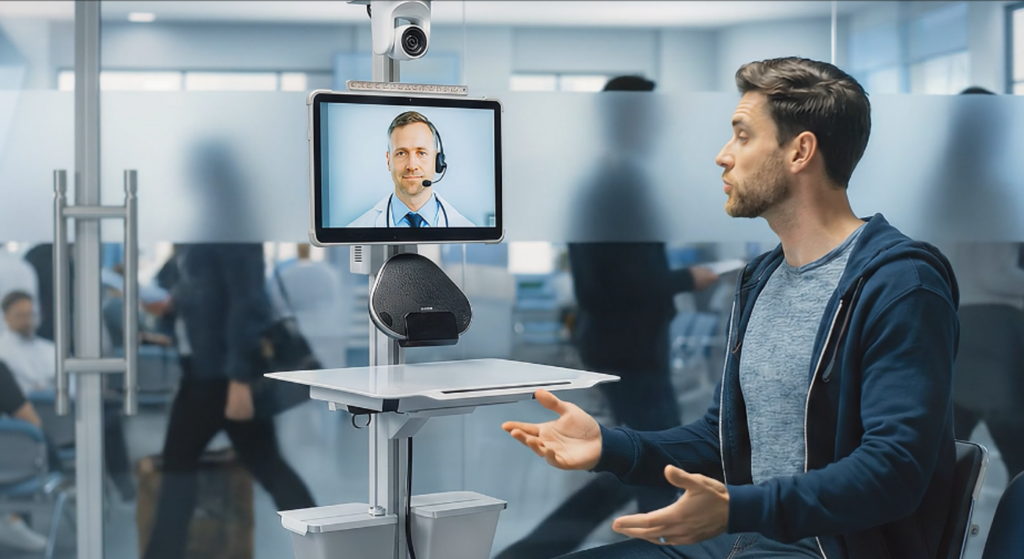
Virtual ED Triage
“Emergency departments need solutions that work at the pace of emergency medicine,” said Dr. Ed Barthell, CEO at EmOpti. “Our partnership with Caregility gives hospitals practical ways to optimize patient ED throughput, reducing boarding times, eliminating patient walkouts or diversions, speeding up triage and care, and proactively monitoring boarding patients up through their admission into an inpatient room. That delivers measurable ROI in quality, revenue, and patient satisfaction.”
Operating Room Workflow Optimization with Apella
Caregility’s partnership with Apella brings AI-powered surgical intelligence and real-time operational insight across surgical workflows, leading to workflow efficiency and effectiveness in the OR. Results include eliminating delays in the surgery schedule, improved turnovers, streamlined coordination, and optimized surgical capacity.
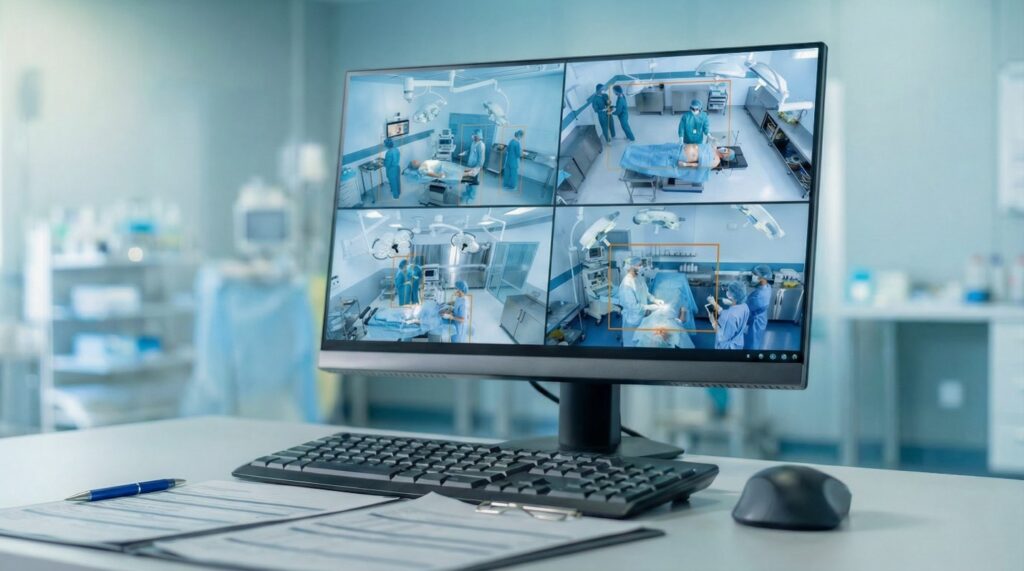
Virtual OR Intelligence
“Surfacing real-time situational awareness throughout the surgical process helps drive workflow efficiency and better patient care in the OR,” said David Schummers, CEO at Apella. “Our partnership with Caregility aligns with our approach of AI-assisted, real-time situational awareness across the entire hospital, delivering consistent impact on operations and patient experience.”
Connected Care Interoperability at Scale
EmOpti and Apella are the latest additions to Care Square, Caregility’s interoperability foundation, joining recent integrations with multiple nurse call platforms, AI-enabled sensors, ambient documentation services, and AI voice agents to form an enterprise-wide ecosystem. The integrated offerings make adoption easier for health systems by supporting single sign-on, shared infrastructure, harmonized user experiences, simplified access across applications, and a common approach to optimizing workflows, patient experience, and ROI.
Care Square enables health systems to bring together best-of-breed solutions that extend the value of connected care infrastructure across new clinical workflows, care settings, and sensor modalities. The ecosystem reflects Caregility’s broader “Build on Us” strategy: giving hospitals a flexible platform that supports innovation without adding unnecessary complexity, duplicative devices, or fragmented workflows.
“Care Square is about giving hospitals the infrastructure to see more, sense more, and act sooner,” said Ron Gaboury, CEO of Caregility. “We’re bringing video, audio, radar, air sensors, edge AI, and partner capabilities together in an industry-first platform for tracking and activating information in the room, whether that’s an ED bay, an operating suite, an ICU room, a med-surg bed, or the patient’s home. The integration of EmOpti and Apella into the Caregility ecosystem will help health systems extend connected care beyond the bedside into moments where speed, awareness, and coordination matter most.”
To learn more about Caregility’s Care Square ecosystem or see the new ED and OR workflow optimization integrations in action, visit Caregility to schedule a demo.
About EmOpti
EmOpti delivers workflow-powered telehealth solutions that help hospitals optimize acute care delivery through intelligent routing, queue management, remote consult workflows, and hybrid care models. EmOpti supports ED, observation, inpatient, and related workflows by connecting on-site teams with remote physicians, advanced practice providers, nurses, and other resources to improve speed, productivity, patient experience, and operational performance.
About Apella
Apella is a health technology company that has developed an OR management platform providing busy hospitals with real-time operational intelligence to eliminate delays, distractions, and inefficiencies throughout the day. Apella uses artificial intelligence and ambient technologies, integrated with EHR data, to automate and optimize coordination, scheduling, and staffing so surgical teams have additional capacity to provide better, safer care to more patients.
About Caregility
Caregility Corporation is a global digital health leader dedicated to connecting care for patients and clinicians everywhere through innovative, AI-assisted solutions. The Caregility Connected Care™ Platform optimizes care coordination and clinical workflow, powering Smart Room strategies with an array of smart sensors that surface real-time actionable insights in the patient room to improve clinician decision support, intervention, and care delivery. Today, Caregility supports more than nine million virtual care sessions annually. From critical and acute, to urgent and emergent, to post-acute and ambulatory, Caregility is connecting care everywhere. Learn more at https://caregility.com/.
Media Contact: Jess Clifton Caregility jclifton@caregility.com (678) 360-9043
Caregility Secures U.S. Design Patent for Smart Room Connected Care Device
Patent recognition reflects Caregility’s commitment to designing healthcare technology around the needs of patients, clinicians, and the modern hospital room
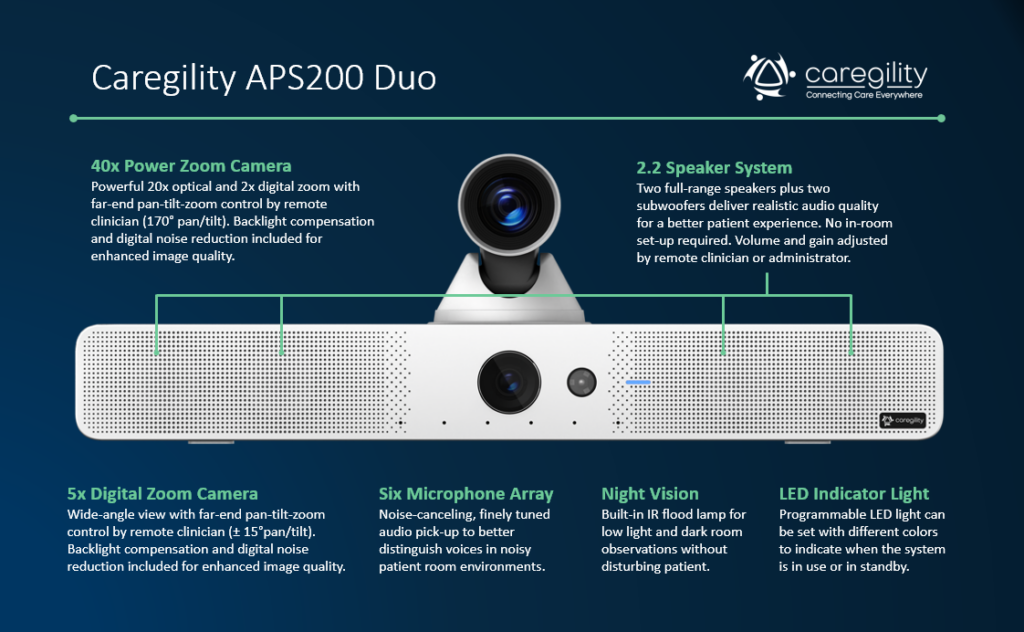
Wall, NJ – July 30, 2026 — Caregility, a global leader in enterprise connected care and AI solutions, today announced that the United States Patent and Trademark Office has granted the company a patent for the distinctive physical design of its flagship APS200 Duo endpoint, purpose-built to support virtual care and smart room workflows.
U.S. Design Patent No. D1,134,876, titled Healthcare Terminal, was granted on July 14, 2026. The patent protects the design of the Duo device, including its distinctive integrated form and appearance. Bin Guan, Albert Sutcavage, Simon Lowe, and David Walter Galas contributed to the development of the innovation.
The patent represents more than a design milestone. It reflects Caregility’s broader product philosophy: clinical technology should be designed specifically for the environments, users, and workflows it serves. Rather than adapting general-purpose conferencing equipment for hospital use, Caregility develops smart room endpoints around the practical requirements of inpatient care. The patented design brings core audio and video room-sensing and engagement components together in a unified form factor intended to optimize clinical workflows while fitting naturally into the patient-room environment.
That clinically informed approach is central to Caregility’s strategy for virtual nursing, virtual observation, virtual consultations, patient and family engagement, and AI-assisted workflows. Caregility’s Duo device serves as an intelligent edge endpoint at the patient bedside, enabling real-time remote communication, continuous sensor-based monitoring, and AI-assisted alerting at the point.
“This patent shows the intentionality behind how we design technology for healthcare. Our devices are purpose-built endpoints designed around the needs of patients, bedside teams, and remote caregivers,” said Bin Guan, Chief Innovation Officer, Caregility. “The physical design supports our vision of creating an intelligent, connected patient room where virtual care, sensors, and AI can work together through a unified, scalable foundation.”
Through the Caregility Connected Care™ Platform, health systems can use endpoints like the Duo to enable a growing range of workflows, including:
Virtual nursing and remote clinical support
Continuous and episodic patient observation
Tele-ICU, Tele-Stroke, and specialist consultation
Patient education, interpreter, and family engagement
AI-assisted documentation and voice-enabled workflows
Smart sensor integration and real-time patient-room awareness
By consolidating these capabilities through a common endpoint and platform architecture, Caregility helps healthcare organizations reduce technology fragmentation, extend the reach of clinical resources, and build smart room environments that can easily evolve as care models and technology requirements change.
The design patent adds to Caregility’s growing portfolio of intellectual property and product innovation supporting connected care delivery. The company continues to invest in bedside technology that enables clinicians to care for patients everywhere while strengthening communication, coordination, and situational awareness for the care team.
To learn more about Caregility’s purpose-built smart room devices and Connected Care Platform, visit https://caregility.com.
About Caregility Caregility Corporation is a global digital health leader dedicated to connecting care for patients and clinicians everywhere through innovative, AI-assisted solutions. The Caregility Connected Care™ Platform optimizes care coordination and clinical workflow, powering Smart Room strategies with an array of smart sensors that surface real-time actionable insights in the patient room to improve clinician decision support, intervention, and care delivery. Today, Caregility supports more than nine million virtual care sessions annually. From critical and acute, to urgent and emergent, to post-acute and ambulatory, Caregility is connecting care everywhere. Learn more at https://caregility.com/.
Media Contact: Jess Clifton Caregility jclifton@caregility.com (678) 360-9043
Caregility and Rauland Integrate to Enable Clinical Collaboration and Response Between Bedside and Virtual Care Teams
Validated through Rauland’s Vendor Integration Partner (VIP) program and now part of Caregility’s Care Square ecosystem, the integration brings bedside virtual care requests and smart room alerts into established clinical workflows.
Wall, NJ – July 23, 2026 –Caregility, a global leader in enterprise connected care and AI solutions, today announced its integration with Rauland, a respected leader in advanced clinical communications and workflow and life-safety solutions, to help hospitals strengthen coordination between bedside and remote care teams.
Validated through Rauland’s Vendor Integration Partner program, the integration connects the Caregility Connected Care™ Platform with Responder Enterprise® to route requests for virtual support and smart sensor-based alarms from the patient bedside to remote clinical teams. By bringing virtual care activation and alerting into established nurse call workflows, the integration helps reduce workflow fragmentation, minimize extra steps for bedside staff, and support faster, more coordinated responses.
The collaboration reflects Caregility’s broader strategy to optimize clinical workflows through smart room technology, AI-assisted alerting, and enterprise interoperability. As hospitals expand virtual care models such as Virtual Nursing and Virtual Observation, integrating connected care capabilities into nurse call workflows helps ensure remote clinicians can operate as an extension of the bedside team.
The combined solution supports more responsive care delivery by strengthening communication between on-site and remote teams, improving visibility into patient needs, and helping clinicians prioritize response. For bedside nurses, the integration enables easier access to remote support without leaving the room or relying on separate hardware. For patients, it creates a more connected care environment where help can be activated and coordinated more efficiently.
The Rauland integration represents the latest addition to Care Square, Caregility’s growing ecosystem of industry-leading technology partners working together to enable seamless, connected care delivery. Care Square brings together capabilities across clinical communications, smart sensors, EHR systems, AI, and more to help ensure that virtual care teams, bedside clinicians, hospital infrastructure, and intelligent automation operate within a unified digital fabric. The Rauland Responder integration extends that ecosystem into one of the hospital’s most critical communication pathways: nurse call.
“For connected care models to reach their full potential, virtual teams must be embedded into the same communication fabric as bedside teams,” said Peter McLain, Chief Strategy Officer at Caregility. “By integrating Caregility’s virtual care request and alerting capabilities with Rauland Responder, we’re helping health systems reduce friction, strengthen team coordination, and deliver safer, more responsive care. Rauland’s inclusion in our Care Square ecosystem marks another important step toward a more interoperable smart hospital environment.”
About Caregility Caregility Corporation is a global digital health leader dedicated to connecting care for patients and clinicians everywhere through innovative, AI-assisted solutions. The Caregility Connected Care™ Platform optimizes care coordination and clinical workflow, powering Smart Room strategies with an array of smart sensors that surface real-time actionable insights in the patient room to improve clinician decision support, intervention, and care delivery. Today, Caregility supports more than nine million virtual care sessions annually. From critical and acute, to urgent and emergent, to post-acute and ambulatory, Caregility is connecting care everywhere. Learn more at https://caregility.com/.
Media Contact: Jess Clifton Caregility jclifton@caregility.com (678) 360-9043
Caregility Listed in Epic Toolbox 2026, Advancing Inpatient Virtual Care Integration for Smart Hospital Workflows
The integration enables AI-assisted connected care within existing Epic workflows
Wall, NJ – July 20, 2026 – Caregility, a global leader in enterprise connected care and AI solutions, today announced its inclusion in Epic Toolbox 2026 for Inpatient Virtual Care, reflecting the company’s ongoing commitment to helping health systems bring digital health innovation into clinical workflow design.
Caregility’s Epic-connected workflows extend clinical capacity, improve care team collaboration, and optimize inpatient care models by bringing virtual engagement and AI to the point of care. The availability of Caregility solutions in Epic Toolbox 2026 provides health systems using the EMR with access to virtual care and AI capabilities that support strategies for virtual nursing, virtual observation, smart room enablement, remote specialist and family engagement, and AI-assisted clinical workflows.
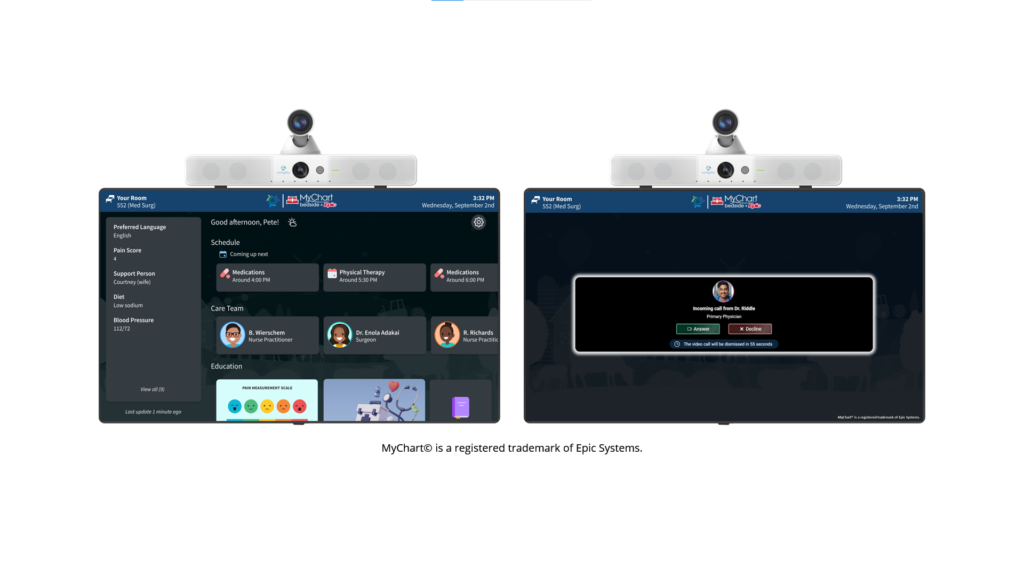
The 2026 designation marks Caregility’s second year in Epic Toolbox for Inpatient Virtual Care. Through CAL, ECAL, and Bedside TV integrations with Epic applications, including MyChart Bedside TV, Epic Monitor, Haiku, and Hyperspace, Caregility enables AI-assisted virtual care across the complete Epic inpatient workflow, from the patient bedside to remote clinician collaboration, all within the applications clinicians already use. Capabilities include HIPAA-compliant bi-directional virtual visits for remote face-to-face engagement, computer vision enhancements for amplified patient safety monitoring, ambient listening for automated documentation, and more.
Caregility’s latest integration with Epic Bedside TV extends virtual engagement capabilities to the monitor in the patient room. Infirmary Health has successfully deployed Caregility and Epic Bedside TV integration to support virtual patient engagement across its inpatient environment.
“As we continue advancing digital care models, integration between Caregility and Epic Bedside TV helps support more connected patient and clinician experiences,” said Zeb Ramey, Director, IT Technical Services at Infirmary Health. “Keeping virtual engagement aligned with our clinical systems is important to scaling these models in a way that effectively supports patients and care teams.”
“As health systems scale inpatient virtual care programs, integration cannot be an afterthought,” said Ron Gaboury, Chief Executive Officer at Caregility. “Care teams need virtual workflows that are accessible within the systems they already use, supported by reliable infrastructure, and enhanced by AI in ways that are practical and clinically meaningful.”
Since its initial Toolbox designation, Caregility has continued to expand its capabilities to support health system adoption of smart hospital strategies. Recent Caregility Connected Care™ Platform advancements include expanded AI capabilities, including voice-enabled workflows, vitals trending, and duress monitoring, along with centralized coordination of virtual care activity, enhanced device and workflow orchestration, broader interoperability, and continued development of Care Square™, Caregility’s integration ecosystem.
Caregility’s Epic Toolbox 2026 milestone also comes amid broader momentum globally. Since the company’s 2025 Toolbox announcement, Caregility has expanded its international presence and partner activity across Australia, Canada, the Middle East, and Japan, where Caregility most recently completed a joint virtual nursing study with Nagoya University Hospital and MediaPlus Co., Ltd., validating the feasibility of remote nursing support in a Japanese Surgical Intensive Care Unit.
“Our vision is to make AI, virtual nursing, bedside engagement, and room intelligence available within the workflows clinicians already use every day,” said Kedar Ganta, Chief Product, Technology, and AI Officer at Caregility. “By implementing all of Epic’s recommended practices across inpatient virtual care workflows, Caregility is helping health systems extend connected care and AI capabilities through the systems clinicians already rely on.”
Caregility’s platform is designed to support smart hospital strategies by connecting patients, bedside teams, remote clinicians, AI, devices, sensors, and integrated systems in a single flexible virtual care ecosystem. This approach helps health systems extend the reach of clinical resources, improve care team collaboration, support patient safety, and build optimized workflows across inpatient environments using real-time engagement and information capture in the patient room.
Caregility will exhibit at Epic UGM 2026, taking place August 17–20 at Epic’s campus in Verona, Wisconsin. UGM attendees are invited to meet with Caregility to learn more about Epic-connected inpatient virtual care workflows and how the Caregility Connected Care™ Platform supports enterprise connected care strategies.
Caregility Corporation is a global digital health leader dedicated to connecting care for patients and clinicians everywhere through innovative, AI-assisted solutions. The Caregility Connected Care™ Platform optimizes care coordination and clinical workflow, powering Smart Room strategies with an array of smart sensors that surface real-time actionable insights in the patient room to improve clinician decision support, intervention, and care delivery. Today, Caregility supports more than nine million virtual care sessions annually across hundreds of leading health systems globally. From critical and acute, to urgent and emergent, to post-acute and ambulatory, Caregility is connecting care everywhere. Learn more at https://caregility.com/.
Epic, MyChart, Haiku, and Hyperspace are registered trademarks of Epic Systems Corporation.
Caregility Completes First-of-Its-Kind Virtual Nursing Research Study with Nagoya University Hospital in Japan
Participants saw a 50% reduction in nursing documentation time in University proof-of-concept
Wall, N.J., June 15, 2026 — Caregility, a global leader in enterprise connected care and AI solutions, together with Nagoya University Hospital, part of the National University Corporation Tokai National Higher Education and Research System, and MediaPlus Co., Ltd., Caregility’s sales distributor in Japan, today announced the completion of a joint research project evaluating the use of Virtual Nursing and remote medical support in Japanese clinical settings.
Conducted from January to February 2026, the Virtual Nursing study (the first of its kind in Japan) was initiated in response to healthcare worker shortages, rising clinical complexity, and increasing nurse workloads. The proof-of-concept evaluated documentation and educational support provided by virtual nurses to bedside nurses in the Surgical Intensive Care Unit (SICU) at Nagoya University Hospital. The demonstration sought to assess the practicality of using remote engagement technology in bedside care models, as well as any associated operational challenges.
Using Caregility APS200 Duo endpoints fixed to patient beds, 11 virtual nurses provided remote support to 11 bedside nurses, each covering two to four patients. Virtual nurses supported nursing documentation based on information shared by bedside nurses, with documentation created collaboratively and reviewed by both parties to help ensure accuracy and safety.
Documentation support included vital sign entry, flow sheet entry, SOAP note entry, and admission/discharge record entry. Virtual nurses also provided coaching support, including pre-task prompts, real-time safety checks, and post-support reflection and feedback.
The bedside nurses participating in the study had a median of one year of SICU experience, while the virtual nurses providing support averaged more than 16 years of nursing experience. The model enabled less-experienced SICU nurses to access support from seasoned nursing resources with extensive bedside experience.
The study showed that remote nursing support could be integrated into SICU workflows while highlighting opportunities to refine operational scope, roles, and documentation workflow. Time measurements showed that the median documentation time for bedside nurses without remote support was 12 minutes. With remote support, that time decreased to under 6 minutes, representing a 50% reduction and indicating the potential to reduce nurse workload while freeing more time for patient care.
Survey responses from participating bedside nurses further indicated that virtual nurse support had a positive impact on documentation workflows:
80% reported reduced time spent on nursing documentation tasks
60% reported a reduced need to take time away from patient care for documentation
50% reported improved timeliness of nursing documentation
Beyond documentation support, survey results indicated that virtual nurses supported clinical decision-making and patient monitoring, suggesting that remote nursing support may help bedside care teams better understand patient status and assist with clinical judgment.
“Japan’s current healthcare settings are facing increasing complexity in patients’ underlying conditions due to a super-aging society, as well as an increase in patients requiring higher levels of nursing care,” said Shintaro Oyama, Associate Professor, Nagoya University Institute of Innovation for Future Society, Center for Preventive Medical Sciences / Graduate School of Medicine. “At the same time, the healthcare field is also facing extremely difficult challenges that must be addressed simultaneously, including the development and support of young nurses who will lead the next generation, as well as workstyle reform for nurses themselves, including improving working environments. In this context, I am convinced that remote nursing support, or Virtual Nursing, which applies telemedicine technology, has significant potential to help address these challenges all at once.”
“The partnership with Nagoya University Hospital represents an important milestone in Caregility’s work to help international healthcare organizations extend clinical expertise, support nurses at the bedside, and build scalable, sustainable connected care models,” said Bin Guan, Chief Product and Innovation Officer, Caregility, and Managing Director, Caregility K.K. “The results show how virtual care can help address universal workforce and workflow challenges while adapting to the unique needs of Japan’s healthcare system.”
Building on the findings, the participating organizations will continue exploring opportunities to optimize nursing documentation support, clarify operational scope and responsibilities, measure educational impact, and evaluate how Virtual Nursing may be adapted to additional care settings in Japan.
The initiative represents an important early example of Virtual Nursing feasibility in Japan’s healthcare settings and reflects the potential for connected care technology to support sustainable care delivery models that address local workforce, workflow, and patient care needs.
Caregility’s growing international presence is further demonstrated by several recent customer wins, including two Tele-ICU programs in Japan, a Ministry of Health initiative in Saudi Arabia, and a Tele-ICU program in Jordan.
“The study with Nagoya University Hospital reinforces that healthcare organizations around the world are facing many of the same challenges,” said Mike Brandofino. “Caregility is uniquely positioned to address those challenges as a connected care platform provider with a proven ability to improve care delivery across diverse healthcare systems and geographic markets.”
About Caregility Caregility Corporation is a global digital health leader dedicated to connecting care for patients and clinicians everywhere through innovative, AI-assisted solutions. The Caregility Connected Care™ Platform optimizes care coordination and clinical workflow, powering Smart Room strategies with an array of smart sensors that surface real-time actionable insights in the patient room to improve clinician decision support, intervention, and care delivery. Today, Caregility supports more than nine million virtual care sessions annually. From critical and acute, to urgent and emergent, to post-acute and ambulatory, Caregility is connecting care everywhere. Learn more at https://caregility.com/.
Verification Study Contact: Nagoya University Institute of Innovation for Future Society Center of Preventive Medical Sciences / Graduate School of Medicine Associate Professor Shintaro Oyama oyama.shintaro.m5@f.mail.nagoya-u.ac.jp
Rutgers School of Nursing and Caregility Partner to Prepare Future Nurses to Provide Virtual Care
The new collaboration, the first in New Jersey, aims to fill a training gap
Wall & Newark, N.J., June 22, 2026 — From hospital command centers to smart patient rooms and home-based care programs, virtual nursing increasingly is becoming a common part of the healthcare landscape.
While 88% of U.S. hospitals are piloting or have fully implemented inpatient virtual care, a critical training gap persists in nursing education: More than half of the nation’s nursing schools don’t offer a telehealth curriculum for undergraduates.
To address this need, Rutgers School of Nursing and Caregility, a Wall Township, N.J., provider of artificial intelligence-enabled connected care services, have announced a collaboration to introduce virtual care training into undergraduate nursing education.
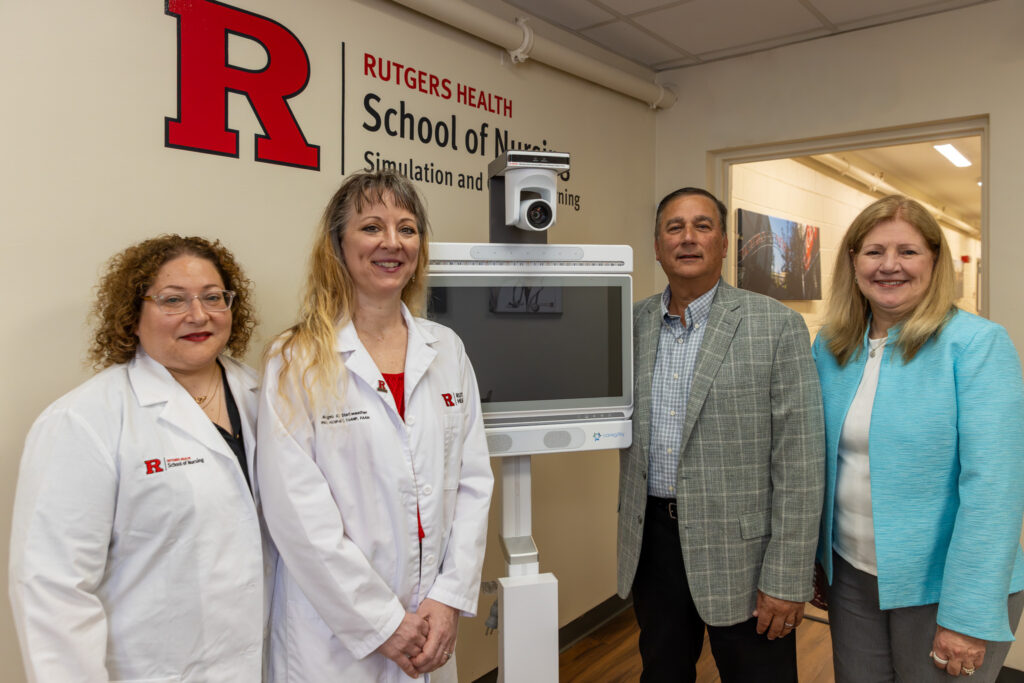
Pictured L to R: Jeannette Manchester (Associate Dean and Associate Professor, Rutgers School of Nursing), Angela Starkweather (Dean, Rutgers School of Nursing), Mike Brandofino (President & COO, Caregility), Susan Kristiniak (Chief Nursing Officer, Caregility). Photo credit to Jeff Arban.
“Educating students for contemporary nursing practice means helping them develop fluency not only in bedside care, but also in the digital tools, communication models and collaborative workflows that increasingly support patient care,” said Angela Starkweather, dean and professor at the Rutgers School of Nursing. “This partnership adds to the leading-edge simulation technologies we employ to support student learning.”
“Virtual care is no longer a future concept in healthcare,” said Susan Kristiniak, Caregility’s chief nursing officer. “It is part of how care is delivered every day.By working with the Rutgers School of Nursing to bring virtual nursing education into the learning environment, we have an opportunity to help prepare future nurses for the realities of connected care and support the evolution of nursing practice.”
Through the collaboration, Caregility is providing access to its Connected Care™ Platform, smart room endpoints and clinical care applications to support virtual care simulation and training experiences within Rutgers’ nursing education program. The partnership represents Caregility’s first academic collaboration in New Jersey.
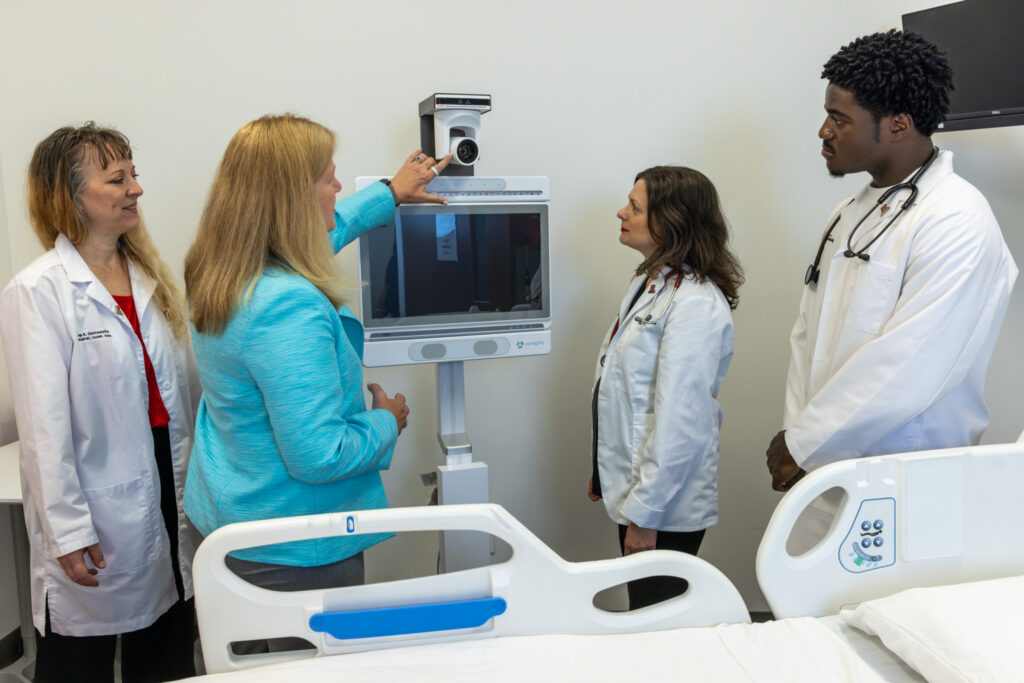
Rutgers will receive seven wall-mounted technology systems equipped with high-zoom cameras, speakers, microphones, infrared lights and video monitors to be installed at nursing labs in Newark and New Brunswick. The agreement includes software, 24/7 support and technical and clinical application training.
The School of Nursing is developing coursework designed to help students build the knowledge, confidence, and practical skills required to work effectively in digitally enabled care environments. It will cover key areas of modern practice, including virtual communication, patient engagement, data privacy and ethics.
Additionally, students will receive training in technology operations, AI-assisted clinical tools, healthcare leadership, mentoring and quality improvement.
The School of Nursing is also developing a certificate program in virtual nursing for practicing nurses to be offered through its Center for Professional Development.
Pictured: Angela Starkweather (Dean, Rutgers School of Nursing) and Susan Kristiniak (Chief Nursing Officer, Caregility) showcasing Caregility’s APS460C Cart to Rutgers School of Nursing Students Julie Cornell and Triumphant Aydodele. Photo credit to Jeff Arban.
Virtual nursing programs are increasingly being used to support patient admissions and discharges, patient education, remote observation, care coordination, tele-intensive care, hospital-at-home services and other clinical functions across acute care, ambulatory and home-based settings.
“Technology can help improve access, strengthen care coordination, and support better patient outcomes,” said Mike Brandofino, president and chief executive officer of Caregility. “When used thoughtfully, virtual care can help healthcare organizations reach more patients, support care teams, and improve the overall quality of care.”
“Caregility’s global leadership in virtual care makes them an ideal partner for this initiative,” Starkweather said. “As one of the nation’s leading schools of nursing, we are committed to building innovative collaborations that advance nursing education, clinical practice and health outcomes.”
About Rutgers School of Nursing The School of Nursing, part of Rutgers Health, is one of 29 schools and colleges of Rutgers, The State University of New Jersey. With campuses in Newark, New Brunswick and Blackwood, the school enrolls more than 1,800 students pursuing bachelor’s, master’s and doctoral degrees and offers continuing education programs for healthcare professionals. Celebrating 2026 as its 70th anniversary year, Rutgers School of Nursing remains committed to advancing nursing education, research and practice.
Rutgers School of Nursing Media Contact Patti Zielinski Assistant Director of Public and Media Relations Rutgers Health 848.932.0551 patti.zielinski@rutgers.edu
About Caregility Caregility is the global leader in enterprise connected care solutions, enabling organizations to deliver care anytime, anywhere. The Caregility Connected Care™ Platform spans inpatient, outpatient, and home settings, helping health systems accelerate digital transformation through secure, scalable, and seamlessly integrated virtual care solutions. Doctors, nurses, and patients around the world rely on Caregility’s smart room devices, virtual nursing, observation, consultation, and AI-enhanced applications to improve clinical workflows, patient safety, workforce efficiency, and access to care. Trusted by hundreds of leading health systems internationally, with more than 9 million virtual care sessions annually, Caregility is connecting care everywhere.
Caregility Media Contact Jess Clifton Director of Marketing jclifton@caregility.com 678-360-9043
Caregility Collaborates with Microsoft to Bring Hands-Free, Real-Time AI Documentation to the Patient Bedside for Nurses
Caregility’s smart room ecosystem automates the capture of critical information in the patient room so nurses can focus on care delivery with fewer interruptions and move more seamlessly across tasks.
Wall, NJ — June 8, 2026 — Caregility, a leading global provider of AI-enabled enterprise connected care, today announced its Caregility Connected Care Platform will be integrated with Microsoft Dragon Copilot. Dragon Copilot, an AI clinical assistant, is the latest integration available to clinical teams through the Caregility platform, which leverages sensor-based technology in the patient room to help improve clinical communication, collaboration, engagement, and outcomes.
Reducing Cognitive Burden for Nurses
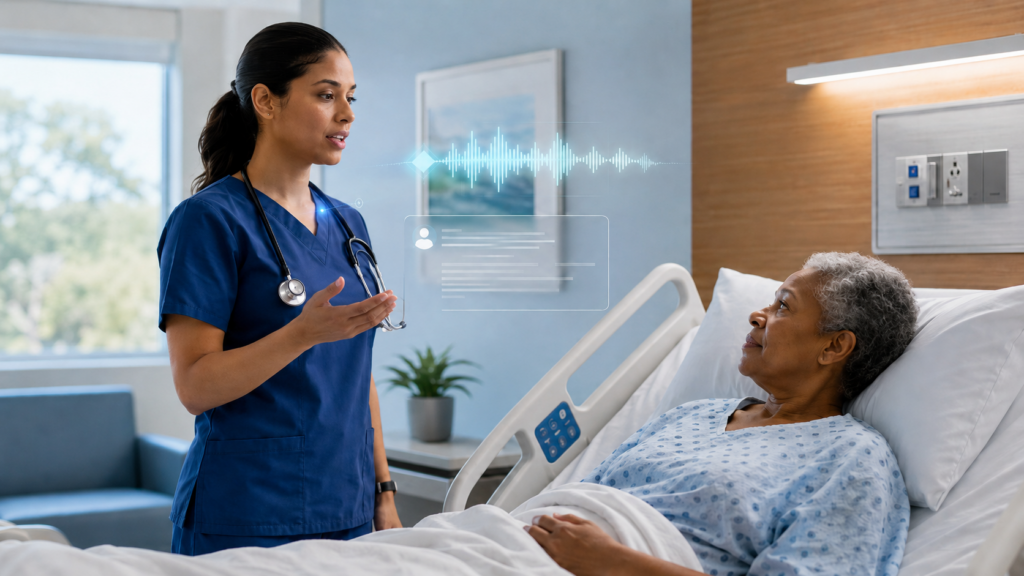
The collaboration will bring hands-free, voice-activated documentation, ambient listening, and clinical workflow support from Dragon Copilot to nurses working in Caregility-enabled smart rooms, capturing clinical conversations in real time so care teams can focus on patients rather than keyboards.
Clinical documentation demands continue to grow across healthcare settings, contributing to workload fatigue and reducing time available for direct patient care. Nurses can lose up to a quarter of every shift to charting that pulls them away from the bedside. Ambiently capturing care in real time supports workflow efficiency, preserving patient facetime and enabling more complete documentation.
“With the Caregility Connected Care Platform integrated with Microsoft Dragon Copilot, we are bringing ambient AI to the Caregility smart endpoints already in the patient room,” said Kedar Ganta, Chief Product, Engineering, and AI Officer at Caregility. “Clinicians don’t need separate devices or workflows to document care; it happens naturally as part of the bedside care experience.”
Modern Solutions to Clinical Workflow Challenges
With this integration, health systems using Caregility, which supports more than 9 million virtual care sessions annually, can incorporate Dragon Copilot’s technology directly into clinical workflows used by nurses across inpatient environments. These capabilities help reduce administrative burden and burnout while improving care team efficiency and patient and staff experience.
The integration builds on Caregility’s expanding Care Square ecosystem of interoperable bedside sensors and devices, including audio, video, radar, and air-sensing endpoints that support continuous patient monitoring and virtual engagement at every bedside. The Connected Care Platform unifies information from the patient room in real time to improve clinical decision-making, intervention times, outcomes, and experience.
Hands-Free Support Tailored to the Nursing Role
Caregility’s integration with Dragon Copilot delivers documentation assistance mapped to the distinct workflows of nursing teams.
Hands-free bedside charting — enables nurses to document care activities and observations by voice directly from the bedside
Real-time capture of observations — voice activation lets nurses log time-stamped observations as they happen, replacing recall-based, end-of-shift charting
Streamlined shift handoffs — AI-assisted summarization of the shift’s events will accelerate handoff reports and reduce information lost between shifts
Support for bedside nursing teams — bedside nursing staff can access voice-enabled documentation through a centralized platform
The integration would mean these hands-free capabilities are available to bedside nurses in environments powered by Caregility’s smart room endpoints, secure infrastructure, and ambient sensor data. Caregility offers the industry’s only edge devices with remotely controlled microphone gain and proprietary audio that enables clear sound pickup in any size room.
Delivering AI at the Point of Care
Built on Microsoft Azure, the Caregility Connected Care Platform enables scalable connected care across inpatient and outpatient settings, intelligently connecting bedside teams, remote clinicians, smart-sensor data, and AI-enabled workflows. Using Dragon Copilot capabilities, healthcare organizations gain:
Reduced documentation burden for nurses
Improved workflow efficiency across clinical care teams
More consistent clinical documentation quality
Enhanced clinician experience and retention
Improved patient experience through more face-to-face time with nurses
“Microsoft is committed to enabling healthcare organizations to deliver more efficient, patient-centered care through AI-driven clinical workflows,” said Tarun Mehra, Partner, Healthcare Strategy & Partnerships, Health and Life Sciences at Microsoft. “By collaborating with Caregility, we are extending Dragon Copilot capabilities into connected care environments, enabling nurses to access intelligent documentation tools when and where care happens.”
The integrated solution is currently available to Caregility customers for Private Preview. Healthcare organizations interested in learning more can request a demo at Caregility.com.
About Caregility Caregility is the global leader in enterprise connected care solutions, enabling organizations to deliver care anytime, anywhere. The Caregility Connected Care™ Platform spans inpatient, outpatient, and home settings, helping health systems accelerate digital transformation through secure, scalable, and seamlessly integrated virtual care solutions. Doctors, nurses, and patients around the world rely on Caregility’s smart room devices, virtual nursing, observation, consultation, and AI-enhanced applications to improve clinical workflows, patient safety, workforce efficiency, and access to care. Trusted by hundreds of leading health systems internationally, with more than 19,000 contracted endpoints supporting more than 9 million virtual care sessions annually, Caregility is connecting care everywhere.
Odawara Municipal General Medical Center Opens “An Excellent Environment”
Odawara Municipal Hospital, which has long supported medical care in western Kanagawa Prefecture, was reborn on May 4 as the Odawara Municipal General Medical Center. The new hospital was built on the site of the former hospital and began outpatient services on May 7.
In addition to serving as a key emergency care center for prefecture-designated secondary medical care, the hospital is equipped with a hybrid ER. It also aims to strengthen collaboration with Showa Medical University, which has accepted many doctors, and has introduced a remote centralized system known as eICU.
To address labor shortages, the hospital introduced four autonomous transport robots. It also reduced energy consumption, strengthened its emergency preparedness by installing well water and wastewater purification systems, and more. Director Norio Kawaguchi said at a preview held before the opening, “I believe it has become an excellent environment. We want this to be a hospital that can provide advanced medical care to the western region.”
The new General Medical Center has nine above-ground floors and a total floor area of 42,234.16 square meters, 1.7 times larger than the former hospital. The number of beds decreased from 417 to 406, but four new departments were added: dentistry, oral surgery, palliative care, and outpatient care, bringing the total to 30 departments.
The total project cost rose by approximately 9 billion yen from the original estimate due to the impact of soaring material prices, reaching roughly 29 billion yen.
The facility achieves energy savings through reduced ventilation in patient rooms, ventilation control using shared CO₂ sensors, and the use of exhaust heat from air conditioning systems. It also uses high-performance thermal-insulating glass, efficient lighting, and energy-saving air conditioning equipment. The hospital obtained a five-star rating, the highest level, under the ZEB Ready standard, certifying that annual primary energy consumption can be reduced by at least 50% compared with a comparable hospital. The hospital is also connected by above-ground passageways to related facilities such as the National Hospital Organization Hakone Hospital and a single-unit pharmacy located nearby.
The hospital is broadly divided as follows:
1st and 2nd floors: outpatient and examination areas
3rd floor: a “super-acute-care floor” that consolidates emergency functions
4th and 5th floors: staff functions, rehabilitation, dialysis, and other areas
6th through 9th floors: inpatient wards
The blue elevator is for patients, while the red elevator is mainly for staff. The staff elevator connects to a dedicated staff area with stairways so that staff can move across emergency, outpatient, testing, surgery, and ward areas as efficiently as possible.
1st and 2nd Floors: Consolidation of Outpatient and Testing Areas
The second floor has wide corridors extending on both the east and west sides, making it easier for staff to work. The main entrance on the first floor serves as the access point for people arriving by bus or on foot, while the east entrance is the entrance for the multi-story parking facility, scheduled for completion around fiscal 2029.
A Living Support Center has been newly established on the first floor. It provides continuous support for patients from before admission through after discharge. It also includes regional medical coordination and discharge support functions, with the goal of building an effective regional, integrated care model through collaboration among healthcare, nursing care, and welfare services.
Monitors have been installed throughout the hospital so staff can check patient waiting and consultation status. In the future, a patient app is expected to allow patients to check when their appointment is approaching from their smartphones, even while away from the hospital. The patient app will also allow patients to register credit card information so they can pay later without stopping at the cashier.
The first-floor reception and outpatient waiting area were designed around the theme of a ribbon. The curved lines create a warm, welcoming design. The waiting areas on the second-floor north and south corridors were designed to help patients avoid getting lost.
There is also a café area on the second floor.
3rd Floor: Super-Acute-Care Floor Concentrating ICU and Surgery
The third floor brings together intensive care and surgical departments to enable efficient emergency care. The number of operating rooms increased from eight to ten, and the area of each department has been significantly expanded. One of the operating rooms is used for outpatient procedures, and one is a hybrid operating room.
Cardiovascular care has been enhanced with two angiography units for catheter treatment and intravascular therapy. Surgery has also been strengthened with the da Vinci Xi surgical support robot.
The ICU increased from four beds in the former hospital to 16 beds, consisting of 10 open beds and six private beds. The eICU remote centralized acute-care management program, operated with Showa Medical University, is also available for all 16 beds, enabling remote support.
The emergency elevator is larger than the standard 13-person elevator and extends to the rooftop heliport, allowing patients to be transported directly to the third floor. The rooms that receive patients from the elevator and carry them to the operating rooms, NICU, and other critical areas are positioned as close together as possible.
The rooftop heliport is expected to be used to accept patients from neighboring areas such as Hakone and Yugawara.
6th to 9th Floors: General Wards, Including Private Rooms Priced at 22,000 Yen
The 6th through 9th floors are general inpatient wards. The 6th floor includes pediatrics and women’s wards, while the 7th through 9th floors include isolation rooms and negative-pressure rooms that can respond to COVID-19 and other infectious diseases.
Approximately 36% of all rooms are private rooms, with the largest being four-bed rooms. The average floor area per bed in a four-bed room has been expanded from 6.8 square meters in the former hospital to 9.6 square meters. Each room entrance includes a toilet and sink, helping ensure privacy and reduce fall risk.
There are three types of paid rooms. The most expensive, the “Special Private Room,” costs 38,500 yen per day for residents of Odawara, Minamiashigara, Ashigarakami District, and Ashigarashimo District, and 41,800 yen for residents outside those areas. The room includes a bathroom, toilet, sink, and storage shelf, and is configured like a semi-private suite, offering a stronger sense of privacy than a typical hospital room.
The other two types are private rooms. “Special Private Room A” and “Special Private Room B” cost 11,000 yen per day, or 15,400 yen for residents outside the two cities and eight towns. A four-bed paid room costs 22,000 yen, or 30,800 yen for outside-area residents, and is equipped with features such as smart televisions.
Robots Transport Carts to Address Staffing Shortages
One of the hospital’s features is the introduction of MoCS, a robot-based autonomous transport system that carries medications and specimens. This helps address staffing shortages among healthcare professionals.
MoCS was jointly developed by Murata Machinery and Nihon Schindler. It consists of autonomous robots and carts that carry items. The robot lifts carts loaded with medications or specimens and transports them automatically. The robot is also integrated with elevators, enabling automated movement between floors.
The robots are mainly operated from nighttime to early morning. If the robot detects a person, it automatically stops.
Staff Lounges and Nap Rooms on Each Floor
Separate staff elevators and stairways are installed. On each floor from the fourth floor upward, staff lounges and nap rooms have been created so staff can relax.
The staff space on the fourth floor has a large area with other departments around it. There are also desks for doctors. The goal is to promote interaction among staff, so the traditional model of fully private rooms for department heads and medical office chairs has been changed.
Using Well Water in Normal Times and Securing Water During Outages
In conjunction with the new General Medical Center, an outdoor wastewater treatment facility was newly installed. The hospital will use well water during normal operations. In the event of a disaster, the system can discharge water into public sewer lines and use a large septic tank to provide low-concentration recycled water as miscellaneous-use water such as for toilets. The hospital also uses a hybrid seismic isolation structure, which is expected to allow continued medical care during a major earthquake.
A double seismic-isolation structure can be seen near the front entrance.
Caregility is proud to support Odawara Municipal General Medical Center’s eICU operations.
Cookie Consent
We use cookies to improve your experience on our site. By using our site, you consent to cookies.
Cookie Preferences
Manage your cookie preferences below:
Essential cookies enable basic functions and are necessary for the proper function of the website.
Name
Description
Duration
Geolocation Config
This cookie is used to store the consent settings based on the visitor's location.
60 days
Cookie Preferences
This cookie is used to store the user's cookie consent preferences.
60 days
CloudFlare provides web performance and security solutions, enhancing site speed and protecting against threats.
These cookies are for internal use which allows Cloudflare to identify production issues on clients.
session
cf_chl_rc_m
These cookies are for internal use which allows Cloudflare to identify production issues on clients.
session
__cfruid
Used by the content network, Cloudflare, to identify trusted web traffic.
session
__cf_bm
Cloudflare's bot products identify and mitigate automated traffic to protect your site from bad bots. Cloudflare places the __cf_bm cookie on End User devices that access Customer sites that are protected by Bot Management or Bot Fight Mode. The __cf_bm cookie is necessary for the proper functioning of these bot solutions.
session
__cflb
When enabling session affinity with Cloudflare Load Balancer, Cloudflare sets a __cflb cookie with a unique value on the first response to the requesting client. Cloudflare routes future requests to the same origin, optimizing network resource usage. In the event of a failover, Cloudflare sets a new __cflb cookie to direct future requests to the failover pool.
session
_cfuvid
The _cfuvid cookie is only set when a site uses this option in a Rate Limiting Rule, and is only used to allow the Cloudflare WAF to distinguish individual users who share the same IP address.
session
cf_clearance
Whether a CAPTCHA or Javascript challenge has been solved.
session
__cfseq
Sequence rules uses cookies to track the order of requests a user has made and the time between requests and makes them available via Cloudflare Rules. This allows you to write rules that match valid or invalid sequences. The specific cookies used to validate sequences are called sequence cookies.
session
cf_ob_info
The cf_ob_info cookie provides information on: The HTTP Status Code returned by the origin web server. The Ray ID of the original failed request. The data center serving the traffic
session
cf_use_ob
The cf_use_ob cookie informs Cloudflare to fetch the requested resource from the Always Online cache on the designated port. Applicable values are: 0, 80, and 443. The cf_ob_info and cf_use_ob cookies are persistent cookies that expire after 30 seconds.
session
__cfwaitingroom
The __cfwaitingroom cookie is only used to track visitors that access a waiting room enabled host and path combination for a zone. Visitors using a browser that does not accept cookies cannot visit the host and path combination while the waiting room is active.
session
cf_chl_rc_i
These cookies are for internal use which allows Cloudflare to identify production issues on clients.
session
Statistics cookies collect information anonymously. This information helps us understand how visitors use our website.
Google Analytics is a powerful tool that tracks and analyzes website traffic for informed marketing decisions.
Contains information related to marketing campaigns of the user. These are shared with Google AdWords / Google Ads when the Google Ads and Google Analytics accounts are linked together.
90 days
__utma
ID used to identify users and sessions
2 years after last activity
__utmt
Used to monitor number of Google Analytics server requests
10 minutes
__utmb
Used to distinguish new sessions and visits. This cookie is set when the GA.js javascript library is loaded and there is no existing __utmb cookie. The cookie is updated every time data is sent to the Google Analytics server.
30 minutes after last activity
__utmc
Used only with old Urchin versions of Google Analytics and not with GA.js. Was used to distinguish between new sessions and visits at the end of a session.
End of session (browser)
__utmz
Contains information about the traffic source or campaign that directed user to the website. The cookie is set when the GA.js javascript is loaded and updated when data is sent to the Google Anaytics server
6 months after last activity
__utmv
Contains custom information set by the web developer via the _setCustomVar method in Google Analytics. This cookie is updated every time new data is sent to the Google Analytics server.
2 years after last activity
__utmx
Used to determine whether a user is included in an A / B or Multivariate test.
18 months
_ga
ID used to identify users
2 years
_gali
Used by Google Analytics to determine which links on a page are being clicked
30 seconds
_ga_
ID used to identify users
2 years
_gid
ID used to identify users for 24 hours after last activity
24 hours
_gat
Used to monitor number of Google Analytics server requests when using Google Tag Manager
1 minute
Google Tag Manager simplifies the management of marketing tags on your website without code changes.
Name
Description
Duration
td
Registers statistical data on users' behaviour on the website. Used for internal analytics by the website operator.
session
cookiePreferences
Registers cookie preferences of a user
2 years
Hotjar is a powerful analytics tool that helps you understand user behavior through heatmaps and session recordings.
Name
Description
Duration
_hjCachedUserAttributes
This cookie stores User Attributes which are sent through the Hotjar Identify API, whenever the user is not in the sample. These attributes will only be saved if the user interacts with a Hotjar Feedback tool.
session
_hjIncludedInSessionSample
This cookie is set to let Hotjar know whether that visitor is included in the data sampling defined by your site's daily session limit
30 minutes
_hjSession_
A cookie that holds the current session data. This ensues that subsequent requests within the session window will be attributed to the same Hotjar session.
30 minutes
_hjSessionUser_
Hotjar cookie that is set when a user first lands on a page with the Hotjar script. It is used to persist the Hotjar User ID, unique to that site on the browser. This ensures that behavior in subsequent visits to the same site will be attributed to the same user ID.
365 days
_hjSessionTooLarge
Causes Hotjar to stop collecting data if a session becomes too large. This is determined automatically by a signal from the WebSocket server if the session size exceeds the limit.
session
_hjSessionRejected
If present, this cookie will be set to 1 for the duration of a user’s session, if Hotjar rejected the session from connecting to our WebSocket due to server overload. This cookie is only applied in extremely rare situations to prevent severe performance issues.
session
_hjSessionResumed
A cookie that is set when a session/recording is reconnected to Hotjar servers after a break in connection.
session
hjViewportId
This cookie stores user viewport details such as size and dimensions.
Session
_hjSessionStorageTest
This cookie checks if the Hotjar Tracking Code can use Session Storage. If it can, a value of 1 is set.
Session
_hjTLDTest
When the Hotjar script executes we try to determine the most generic cookie path we should use, instead of the page hostname. This is done so that cookies can be shared across subdomains (where applicable). To determine this, we try to store the _hjTLDTest cookie for different URL substring alternatives until it fails. After this check, the cookie is removed.
session
_hjCookieTest
This cookie checks to see if the Hotjar Tracking Code can use cookies. If it can, a value of 1 is set.
Session
_hjUserAttributesHash
User Attributes sent through the Hotjar Identify API are cached for the duration of the session in order to know when an attribute has changed and needs to be updated.
session
_hjIncludedInPageviewSample
This cookie is set to let Hotjar know whether that visitor is included in the data sampling defined by your site's page view limit.
30 minutes
_hjLocalStorageTest
This cookie is used to check if the Hotjar Tracking Script can use local storage. If it can, a value of 1 is set in this cookie. The data stored in_hjLocalStorageTest has no expiration time, but it is deleted immediately after creating it so the expected storage time is under 100ms.
-
_hjHasCachedUserAttributes
This cookie sets when a user first lands on a page. Persists the Hotjar User ID which is unique to that site. Hotjar does not track users across different sites. Ensures data from subsequent visits to the same site are attributed to the same user ID.
365 days
_hjid
Hotjar cookie. This cookie is set when the customer first lands on a page with the Hotjar script. It is used to persist the random user ID, unique to that site on the browser. This ensures that behavior in subsequent visits to the same site will be attributed to the same user ID.
365 days
hj_visitor
hotjar uses cookies to enhance the user’s experience on our website, for example to complete forms, navigating the site, and identify returning users and offer related content. Users can control the use of cookies at the individual browser level.
Session
_hjIncludedInSample
Hotjar cookie. This session cookie is set to let Hotjar know whether that visitor is included in the sample which is used to generate funnels.
365 days
_hjClosedSurveyInvites
Hotjar cookie. This cookie is set once a visitor interacts with a Survey invitation modal popup. It is used to ensure that the same invite does not re-appear if it has already been shown.
365 days
_hjDonePolls
Hotjar cookie. This cookie is set once a visitor completes a poll using the Feedback Poll widget. It is used to ensure that the same poll does not re-appear if it has already been filled in.
365 days
_hjMinimizedPolls
Hotjar cookie. This cookie is set once a visitor minimizes a Feedback Poll widget. It is used to ensure that the widget stays minimizes when the visitor navigates through your site.
365 days
_hjDoneTestersWidgets
Hotjar cookie. This cookie is set once a visitor submits their information in the Recruit User Testers widget. It is used to ensure that the same form does not re-appear if it has already been filled in.
365 days
_hjMinimizedTestersWidgets
Hotjar cookie. This cookie is set once a visitor minimizes a Recruit User Testers widget. It is used to ensure that the widget stays minimizes when the visitor navigates through your site.
365 days
_hjShownFeedbackMessage
This cookie is set when a visitor minimizes or completes Incoming Feedback. This is done so that the Incoming Feedback will load as minimized immediately if they navigate to another page where it is set to show.
365 days
_hjFirstSeen
The cookie is set so Hotjar can track the beginning of the user's journey for a total session count. It does not contain any identifiable information.
30 minutes
_hjAbsoluteSessionInProgress
The cookie is set so Hotjar can track the beginning of the user's journey for a total session count. It does not contain any identifiable information.
30 minutes
_hjptid
This cookie is set for logged in users of Hotjar, who have Admin Team Member permissions. It is used during pricing experiments to show the Admin consistent pricing across the site.
session
Vimeo is a video hosting platform for high-quality content, ideal for creators and businesses to showcase their work.
Collects analytical tracking information about videos and enables the player to function properly.
2 years
sd_identity
Collects analytical tracking information about videos and enables the player to function properly.
2 years
continuous_play_v3
Used to keep track of whether continuous play is on or not for a user
2 years
Player
This first party cookie created by Vimeo is used to remember user’s player mode preferences.
1 minute
vuid
This first party cookie created by Vimeo is used to assign a Vimeo Analytics unique id.
1 minute
Marketing cookies are used to follow visitors to websites. The intention is to show ads that are relevant and engaging to the individual user.
Name
Description
Duration
hubspotutk
Hubspot
1 day
__hstc
Hubspot
6 months
__hstc
Hubspot
1 day
__hssrc
Hubspot
1 day
__hssc
Hubspot
1 day
HubSpot is an all-in-one marketing, sales, and customer service platform that streamlines business growth.
Name
Description
Duration
hs-messages-hide-welcome-message
This cookie is used to prevent the chat widget welcome message from appearing again for one day after it is dismissed.
1 day
hubspotapi-prefs
This is used with the hubspotapi cookie to remember whether the user checked the 'remember me' box (controls the expiration of the main cookie's authentication).
1 Year
hubspotapi
This cookie allows the user to access the app with the correct permissions.
7 days
__hs_opt_out
This cookie is used by the opt-in privacy policy to remember not to ask the visitor to accept cookies again.
13 months
hubspotapi-csrf
This is used for CSRF prevention - preventing third party websites from accessing your data. Expires after a year.
1 year
__hs_do_not_track
This cookie can be set to prevent the tracking code from sending any information to HubSpot.
13 months
__hs_cookie_cat_pref
This cookie is used to record the categories a visitor consented to.
6 months
__hs_initial_opt_in
This cookie is used to prevent the banner from always displaying when visitors are browsing in strict mode.
7 days
__hs_gpc_banner_dismiss
This cookie is used when the Global Privacy Control banner is dismissed.
180 days
hs_ab_test
This cookie is used to consistently serve visitors the same version of an A/B test page they’ve seen before.
session
__hs_notify_banner_dismiss
This cookie is used when the website uses a Notify consent banner type.
180 days
hs-messages-is-open
This cookie is used to determine and save whether the chat widget is open for future visits.
30 minutes
__hsmem
This cookie is set when visitors log in to a HubSpot-hosted site.
1 year
hs-membership-csrf
This cookie is used to ensure that content membership logins cannot be forged.
session
hs_langswitcher_choice
This cookie is used to save the visitor's selected language choice when viewing pages in multiple languages.
2 years
__hstc
The main cookie for tracking visitors.
13 months
hubspotutk
This cookie keeps track of a visitor's identity. It is passed to HubSpot on form submission and used when deduplicating contacts.
13 months
__hssc
This cookie keeps track of sessions.
30 minutes
__hssrc
Whenever HubSpot changes the session cookie, this cookie is also set to determine if the visitor has restarted their browser.
session
messagesUtk
This cookie is used to recognize visitors who chat with you via the chatflows tool. If the visitor leaves your site before they're added as a contact, they will have this cookie associated with their browser.
13 months
LinkedIn Insight is a web analytics service that tracks and reports website traffic.