In healthcare, every detail matters – a few extra decibels can disturb a patient’s rest, or an extra click can add to the clinician’s burden. This July, we’ve released several enhancements that bring us closer to building a more inclusive and intelligent connected platform.
Designing for Everyone with a Focus on Accessibility
We looked at our platform and asked ourselves the question: What more can we do to support every user? This means designing for everyone across different abilities, languages, cognitive needs, and preferences.
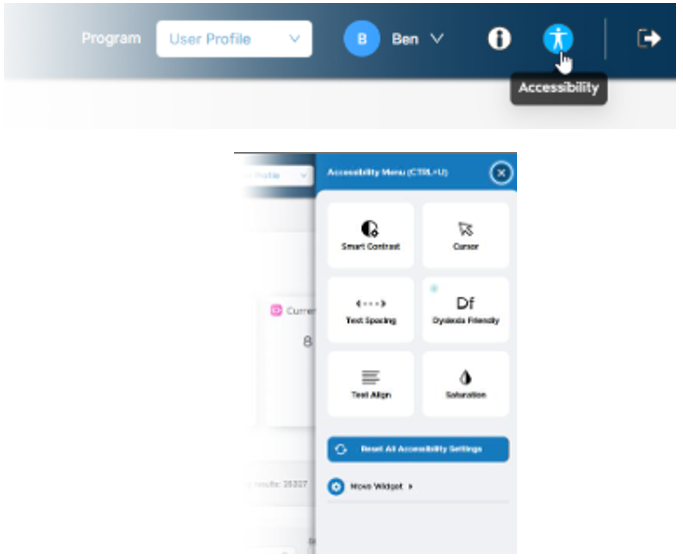
In this release, we’ve introduced a new Accessibility Widget in the Global Header for both Control Hub and iCare Coordinator. This small but meaningful addition allows users to personalize their experience with features like adjusting smart contrast, dyslexia-friendly fonts, adjustable text spacing, and cursor enhancements for better visual clarity. It’s one of the many steps in building a more inclusive platform. We are actively seeking your input to shape what comes next so everyone can navigate through our platform with ease, comfort, and confidence.
Clarity in the Control Hub
As your organization grows, so does the need to delegate access securely to manage operations. In this release, we’ve introduced a Read-Only Admin Role, allowing your system administrators to grant view-only access to certain key users. These users can now view and export data without the risk of making changes. To complement this, we are providing Bulk Program Association, enabling user admins to assign users to programs through a simple CSV import. It’s a small change that helps streamline onboarding and reduces friction in daily account management.
Device uptime and visibility continue to be a top priority for administrators. That’s why APS device endpoints now show new status indicators, giving administrators better diagnostics and real-time visibility into device uptime and activity. We are continuing to enhance device monitoring across different hierarchy levels in the upcoming release.
Intelligent Endpoints
Our APS endpoints are at the heart of every observation, call, and alert. We are evolving our endpoints into something more – an anchor in the patient room to power a more connected and intelligent ecosystem. In this release, we are making major updates to future-proof APS endpoints with OS upgrades to Android 14 and Ubuntu 22.04 for improved performance and security. We are expanding hardware compatibility with PDI, RCS, LG, and Samsung IPTV models to support two-way video calls, and to support USB peripheral devices like stethoscopes and video scopes for remote patient assessment. These changes will support emerging technologies and extend their value as a cornerstone of connected care delivery.
Sensing, Seeing, and Augmenting with AI
Our AI journey is well underway. We’re enabling various capabilities like Ambient Listening to detect distress signals in real time, Augmented Observation to monitor patient movement and behavior patterns, and Ambient Documentation to make clinical note-taking smarter. In our deployment of AI technology at some sites as part of our Early Field Trials, our computer vision technology is already showing promising results around accuracy rates. With each update, our AI becomes more deeply embedded into workflows, helping capabilities become more integrated into care delivery.
A Better Virtual Experience
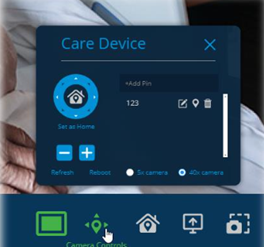
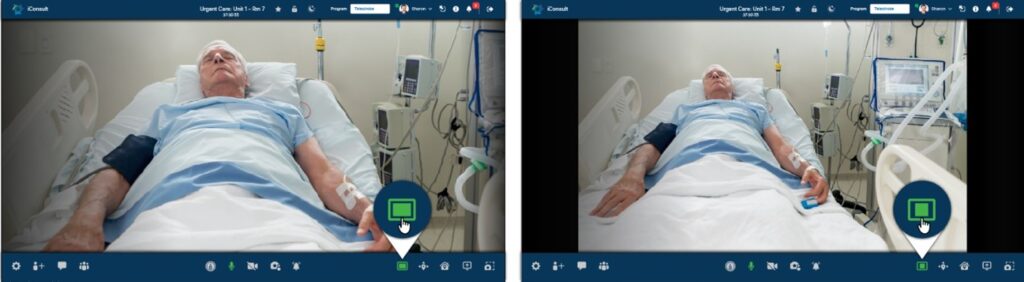
This month, we’ve refined virtual consultations to be more seamless and engaging. Users can now enjoy a full-screen view, adjustable camera widget sizes, and integrated Propio interpreter services – all directly within the call experience. On mobile, we have optimized the interface by removing unwanted cross messages to make better use of screen space. Meanwhile, the iObserver application now includes key updates such as Privacy mode with screen blurring and expanded dashboard access for greater visibility and user control.
Our continued investment in human-centered platform design – from enhancing accessibility to advancing device intelligence and AI-powered experiences – reflects our commitment to building a platform that evolves with your needs and adapts to emerging technologies.
We look forward to hearing your feedback and to continuing this journey together.
Warm regards, Kedar Chief Product and Technology Officer
What’s New: Caregility May/June 2025 Update
Author: Kedar Ganta Date: June 2, 2025
As we reach the halfway point of the year, we have crossed a major milestone in our journey to support your evolving care models. Over the past few weeks, we completed an important upgrade to the Caregility Connected Care™ platform. This shift lays the foundation for faster innovation and stronger performance as we expand with you.
With the new platform foundation, we’ve moved our core backend services to a more modern and scalable architecture. You will experience a foundation that is built for enterprise-scale growth with better load times and deeper integrations between applications. Whether you are deploying our technology across a few units or hundreds of rooms, you will see the difference.
In tandem with platform upgrades, we rolled out a host of features across our product suite. These enhancements are designed to make your workflows tighter and operations smoother.
Observers often manage several patients at once, so everything counts. We made iObserver faster and easier to use by reducing login wait times. Observers can now trigger the ‘Notify’ alarm for multiple patients simultaneously while they are in a virtual session. Moreover, to keep things smooth, we enhanced the ‘Patient Successfully Added’ notification so that it fades away after a few seconds without requiring the user to click on the ‘OK’ button.
In the next release, we will continue to invest in adding additional phrases to our ‘Multilingual Phrases’ feature. We will also be expanding access for iObserver users so they can view dashboards.
Clinicians are juggling multiple priorities – managing numerous calls and staying responsive. In the recent release, we made iConsultmore customizable and polished by giving the ability to store up to 10 custom virtual backgrounds in the Control Hub. This means clinicians can select that background or setting that best suits their role, offering a personalized video presence experience. We also worked on alert fatigue by shortening the window from 4 hours to 1 hour to remove stale alerts. This helps ensure that only actionable, not outdated, alerts are shown on the screen.
In the next release, we are making full-screen mode the default view during ad hoc calls, removing those inconvenient black bars to give a more immersive experience. Additionally, to help virtual teams stay aligned – especially across shifts – we are introducing real-time visibility. This new feature will let you see which team members are currently online, enabling more confident and informed decisions when escalating or assigning alerts.
On the AI front, we introduced a new Clinical Notes feature that is designed to make ambient note taking smarter. We are currently working with a few customers to get feedback on the workflows. Your input will help reduce documentation burden and improve charting accuracy for clinicians.
At their core, our APS endpoints are more than a device. They’re powered by multiple smart sensors that provide the input our Artificial Intelligence needs to generate meaningful insights! Stay tuned – we’ll be sharing more about the AI innovation we are bringing to the platform.
As technology evolves, APS endpoints will continue to advance along with these changes. We are updating the APS Linux OS to the 3.nn version to support AI-powered innovation. The new APS version retains all existing features while laying the foundation for smarter AI-driven capabilities. With added support for 5G and Starlink, APS endpoints can be deployed on the move, making it ideal for remote care. Keep an eye out for upcoming details where we discuss new medical peripherals, including USB-compatible video scopes and stethoscopes.
We are also making important investments in accessibility. Users will be able to adjust text size and color contrast directly from the screens using a built-in accessibility widget. In parallel, we are simplifying the data export process for Admin users, making it easier to manage and support.
These updates are a broader part of our investment in making our products more human-centered, responsive, and easier to use.
Warm regards, Kedar Chief Product and Technology Officer
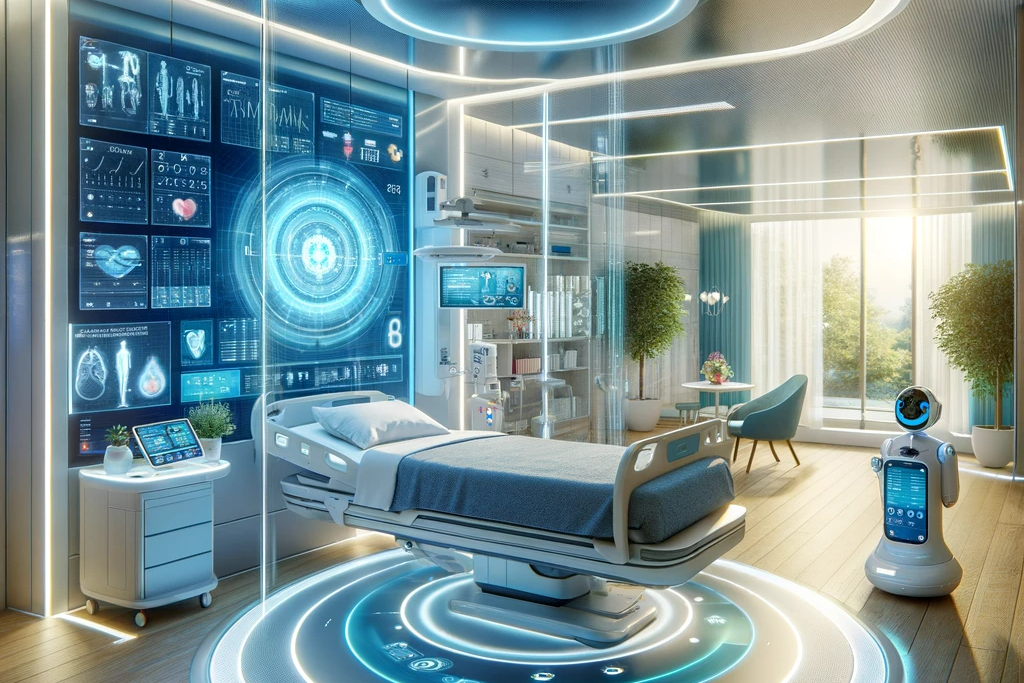
Hospital of the Future & the Race for the Patient Footwall
Budgetary constraints and staffing challenges are compelling healthcare organizations to rethink their operational strategies to find new ways for burned-out care teams to work smarter, not harder.
One strategy that providers are employing to drive efficiency, standardize processes, and elevate the standard of care in inpatient settings is the adoption of hybrid care models. These care models introduce remote clinicians and digital health tools at the bedside. Leading health systems such as Houston Methodist, OhioHealth, and UMass Memorial Health are among those planting the first “smart hospital” and “hospital of the future” flags, introducing high-end technologies in every patient room.
As healthcare organizations bring telehealth, artificial intelligence (AI), interactive patient consoles (IPCs), and other health IT resources to the hospital bedside, the race for a space on the patient footwall is heating up. And hospitals looking to differentiate themselves and improve operations through the adoption of innovative technologies are rightfully being more discerning in their product evaluations.
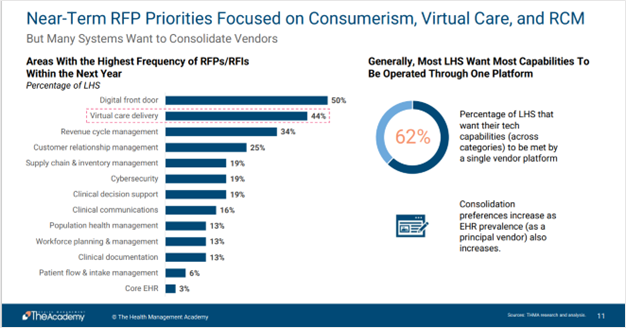
Increasingly, providers are favoring a platform approach to underpinning infrastructure in an effort to keep solution sprawl and fragmentation at bay. Recent research from the Health Management Academy reveals that 62% of leading health systems want their tech capabilities (across categories) to be met by a single vendor.
Signify Research similarly observed a shift in provider preferences towards solutions that cater to broader use cases. “Historically, endpoint solutions have been departmental, siloed, point-focused products (hardware-centric), however, enterprise-scale solutions with a focus on platform-centric and configurable workflows have become increasingly prominent.” Continuous monitoring solutions are cited as a prime example of this shift from point solutions to comprehensive platforms that not only centralize but also simplify resource administration and management.
The ability of bedside technology to integrate seamlessly with existing hospital systems, especially the Electronic Health Record (EHR), is crucial for securing a coveted spot on the patient footwall. A platform’s ability to seamlessly integrate with a broad spectrum of peripheral systems further supports consolidated solutioning, allowing care teams to pilot adjacent technologies more easily.
Case in point: In the realm of virtual care, new telehealth edge devices like Caregility’s APS200 Duo enable healthcare organizations to introduce AI capabilities using the same device that supports audio and video feeds used for virtual patient engagement and observation. The device’s ability to integrate with IPCs and smart TVs in the patient room allows care teams to leverage existing technology investments during implementation.
As healthcare institutions continue to integrate advanced technologies into care delivery, the importance of unified, platform-based solutions becomes ever more apparent. This strategic approach not only simplifies infrastructure but also significantly boosts care teams’ ability to deliver personalized, efficient, and high-quality care at scale.
Hybrid Care in the Age of Retail Health
Amazon Clinics and other direct-to-consumer (DTC) healthcare market entrants are “disintermediating the traditional healthcare journey,” as Trilliant Health researcher Sanjula Jain, Ph.D., recently put it. As retail health options flood the field, patients are increasingly by-stepping PCPs in favor of DTC telehealth solutions to address their low-acuity healthcare needs.
For those who can take advantage of DTC telehealth services, there is a clear convenience win. However, some argue that this disruption to the status quo is introducing additional fragmentation that can negatively impact patient care and provider operations.
Implications for Patients: One major question arising from the surge in retail care relates to the handling of patient data exchange. If a patient receives treatment from a retail health provider, how will that care episode be integrated into their primary health record?
Implications for Providers: For traditional healthcare providers, the rise of DTC healthcare models can result in a loss of critical patient insight or potential patient drift to other care delivery sources, eroding health system market share and revenue.
As we watch the debate over whether patients should also be regarded as consumers play out in a literal sense, here’s the reality: We are all patients seeking effective care and consumers demanding modern convenience and responsiveness. The ideal health system is one that delivers on both.
How Providers Can Compete
Competing in a modern healthcare market disrupted by retail health will require some degree of assimilation on behalf of healthcare provider organizations (HPOs). By establishing hybrid models of care that include virtual service offerings, providers can give patients the same easy access to low-acuity care as DTC alternatives, keeping patients within the health system.
Beyond creating clear and convenient pathways to non-urgent care, strategically wielding virtual care across the enterprise poses additional competitive benefits for health systems. When used at the bedside, inpatient virtual engagement tools introduce remote clinical support resources to patients and floor teams, improving patient experience and outcomes in mid-to-high acuity care encounters, as well. Integrated virtual care empowers HPOs to offset staffing challenges while keeping pace with other industries in terms of delivering the convenience and digital access consumers have come to expect.
With an aging patient population and chronic conditions on the rise, these tools will become even more essential to health systems’ survival. Looking ahead, HPOs can anticipate similar outside competition from retail health as Aging-in-Place and Hospital-at-Home programs continue to move the point of care beyond traditional brick-and-mortar institutions. Establishing the virtual care infrastructure now will help providers meet emerging demand by enabling remote monitoring and management of chronic conditions. Here, provider organizations that have the historic relationship and longitudinal patient data to support a more personalized care plan may garner an edge.
A Catalyst for Care Model Transformation
By embracing hybrid care, healthcare organizations can provide more convenient, personalized, and efficient care, which is crucial for competing against retail health competitors and meeting the evolving needs of the patient population.
Perhaps one of the reasons healthcare has historically lagged other industries in terms of innovation has been due to the absence of significant external threats. Whether this is true or not, it’s clear that healthcare as an industry is at an inflection point.
In a world rapidly moving towards direct-to-consumer health models, healthcare organizations can’t remain passive observers. To compete effectively, we must pivot, innovate, and integrate. By embracing hybrid care models, healthcare organizations can honor both the patient and consumer aspects of individuals and secure their place in the future landscape. The era of retail healthcare isn’t a threat; it’s an opportunity to evolve and provide better, more connected care everywhere.
Designed for clinicians by clinicians, Caregility Cloud™ connects diverse clinical environments on a single, flexible virtual care platform. This helps health systems deliver and reinforce care wherever the patient is located, from the ICU to the ED to the clinic to the home.
Watch the video below to see how our award-winning solution can work for your health system!