Caregility Launches the “LOOP” to Help Hospitals Quantify the Value and Workforce Impact of Virtual Care
The ROI framework evaluates how AI-enabled connected care improves healthcare delivery, reduces labor pressure, and drives operational efficiency
Wall, NJ – Dec. 3, 2025 – Caregility, a global enterprise telehealth leader connecting care for patients and clinicians everywhere through innovative virtual care and AI-powered solutions, today announced the launch of the Lens on Organizational Performance, or LOOP. This breakthrough framework enables hospitals to objectively measure the effectiveness of virtual care and its contribution to smarter, more efficient workforce utilization.
A New Starting Point: Diagnostic Insight into Workforce Utilization
A core component of the LOOP is its initial diagnostics, which analyze how effectively health systems are using their clinical workforce before and after virtual care implementation. This includes evaluating changes in overtime usage, contract and agency labor dependence, overall labor expenditures, and workflow time allocation and outcomes achieved.
This diagnostic baseline allows hospitals to see not just what changed, but why, and whether virtual care is truly acting as a catalyst for more efficient, effective care delivery.
“Caregility doesn’t want to simply implement technology,” said Susan Kristiniak, DHA, MSN, RN, NEA-BC, AHN-BC, Chief Nursing Officer at Caregility. “We want to positively impact care delivery and prove it’s working. The LOOP gives hospitals the visibility to determine whether virtual care is meaningfully helping to improve patient outcomes and workforce efficiency. We built this framework so health systems can hold us accountable for results while celebrating measurable operational and clinical gains.”
Customizable Benchmarks and Point-of-Care Measurement
Every hospital’s goals, staffing model, and care environment are unique. The LOOP allows health systems to customize benchmark assumptions, identify their own program goals and KPIs, and choose which points of care they want to track—whether inpatient, observation units, bedside virtual nursing, telemetry, ICU, hospital-at-home, or other areas. This flexibility ensures that each health system measures value aligned to its own priorities.
A Customer Perspective on the Need for Ongoing Measurement
“Like many hospitals across the country, we made significant investments in virtual care to help address staffing shortages and improve the efficiency of our operations. As virtual care has become woven into more of our core workflows, we’ve reached a point where we need a reliable, ongoing way to measure and monitor its effectiveness. With the LOOP, Caregility is on the right track to give us the clarity and confidence to understand what’s working, identify where to improve quality, and support our expansion plans with real evidence behind every step.” — Kourtney Matlock, MHSA, President of Baptist Health Rehabilitation Institute and System Post Acute Services
Evidence-Based, Low-Lift, High-Impact
The process to initiate LOOP analytics requires minimal effort from hospital teams. Caregility performs the complete analysis and delivers a comprehensive ROI and outcomes report, an interactive performance dashboard, and insights into clinical quality, operational efficiency, workforce utilization, and staff satisfaction.
About Caregility Caregility is the global leader in enterprise connected care solutions, enabling organizations to deliver care anytime, anywhere. The flagship Caregility Connected Care™ platform spans inpatient, outpatient, and home settings, supporting millions of virtual care encounters annually. Caregility helps health systems accelerate digital transformation by improving clinical workflows, patient experience, and workforce efficiency through secure, scalable, and seamlessly integrated digital health solutions.
Caregility Launches Care Square – Powering Smart Hospitals of the Future with the Industry’s Most Comprehensive Connected Care Ecosystem
Care Square’s open architecture integrates AI, virtual care, and peripheral systems and sensors to amplify clinical intelligence, collaboration, and patient engagement.
Wall Township, NJ – Nov. 20, 2025– Caregility, a global enterprise telehealth leader dedicated to connecting care for patients and clinicians everywhere through innovative virtual care and AI-powered solutions, today announced the launch of Care Square, a groundbreaking connected ecosystem designed to streamline and elevate patient care workflows and power the next generation of Smart Hospitals.
Foundational to the Caregility Connected Care™ platform, Care Square is a fully integrated ecosystem of multiple solutions, seamlessly aligned for patient-centered care. Built on years of collaboration with leading health systems, Care Square unifies dozens of best-in-breed data collection sensors and medical monitoring devices, AI automation and predictive analytics, audio and video communications, interactive smart TVs and digital whiteboards, nurse call systems, EHRs, and more. Care Square delivers the foundation for an enterprise-wide connected care platform that enhances collaboration, clinical workflows, operational efficiency, and patient experience.
The launch of Care Square marks a new phase in Caregility’s “Build on Us” initiative, a strategic program inviting partners and health systems to leverage Caregility’s open architecture to expand the digital health ecosystem and build out fully connected Smart Hospitals.
“Unintegrated or incompatible siloed applications and point solutions often slow down clinical workflows and fail to deliver improvements in patient care,” said Ron Gaboury, CEO of Caregility. “With Care Square, we’ve created a unified ecosystem that integrates virtual care, AI, digital health, and smart room innovation into one seamless platform that delivers measurable improvements in care delivery. It’s the catalyst for digital health transformation and the foundation of the smart hospital of the future.”
Reimagining the Smart Room of the Future
Care Square enables intelligent, connected patient rooms that transform care delivery. By bringing together virtual care, EHR-integrated workflows, AI-powered monitoring and sensing, and automated device management, Care Square supports:
Real-time Situational Awareness – Context-aware data flows between bedside sensors and devices and care teams, with actionable insights.
Improved Care Coordination – Connect remote and bedside care teams for elevated care delivery.
Optimized Clinical Workflows – Automate data collection and routine tasks to free up clinicians for higher-value care.
Elevated Patient Experience – Timely care delivery with personalized engagement.
“Having a partner that is dedicated to a holistic approach to digital and virtual care is critical to achieving our long-term vision for healthcare transformation,” said Jon Witenko, System Director of Digital Transformation at Lee Health. “Care Square provides the kind of integrated platform that is helping us streamline and speed up patient care delivery, optimize our clinical workflows, and deploy at scale.”
A Unified Digital Health Ecosystem
Care Square builds on Caregility’s proven track record supporting 1,100+ hospitals, 30,000+ connected devices, and 6M+ annual virtual care sessions. The platform delivers:
Best-in-Breed Partner Access – Integrated solutions from leading digital health, AI, and device innovators that streamline and accelerate clinical workflows.
Enterprise Interoperability – Deep integration with EHRs, sensors, medical devices, and smart room platforms to eliminate data silos.
Smart Hospital Enablement – A connected care infrastructure that improves clinical workflows, patient experience, and operational scalability.
Simplified Vendor Management – One platform, one contract, multiple capabilities—reducing complexity across IT and clinical operations.
Future-Ready Architecture – An open, API-first design built to integrate emerging technologies and next-generation care models.
With Care Square, Caregility sets a new standard for digital health innovation, delivering the connectivity, intelligence, and flexibility required to drive the industry’s evolution toward fully integrated Smart Hospitals and healthcare transformation.
Learn more about the Care Square integration ecosystem here. Parties interested in joining the Care Square ecosystem can learn more here.
About Caregility Caregility is the global leader in enterprise connected care solutions, enabling organizations to deliver care anytime, anywhere. The flagship Caregility Connected Care™ platform spans inpatient, outpatient, and home settings, supporting millions of virtual care encounters annually. Caregility helps health systems accelerate digital transformation by improving clinical workflows, patient experience, and workforce efficiency through secure, scalable, and seamlessly integrated digital health solutions.
Caregility and MOD3RN Care Partner to Modernize Healthcare Delivery in Australia
WALL, N.J. and BARANGAROO, Australia, Nov. 3, 2025 — Caregility Corporation, a global enterprise telehealth leader dedicated to connecting care for patients and clinicians everywhere through innovative virtual care and AI-powered solutions, today announced a strategic reseller partnership with MOD3RN Care, a leading Australia-based technology solutions provider. The collaboration aims to accelerate the adoption of virtual care and AI-enabled care models across Australia to strengthen clinical capacity, improve patient safety, and reduce staff burnout.
The partnership aligns with growing momentum across Australia’s public and private sectors to modernize care delivery through hybrid models that combine clinical excellence with digital efficiency. Under the agreement, MOD3RN Care will distribute Caregility’s Connected Care™ Platform and edge AI devices throughout the region, supporting hospitals and health systems as they adopt scalable, secure, virtual care programs spanning inpatient, outpatient, long-term care, and home settings.
“Australia’s health systems are facing many of the same workforce challenges the U.S. experienced during and following the pandemic,” said Nicholas Rorris, CEO of MOD3RN Care. “Caregility’s Connected Care Platform and Virtual Nursing workflows have demonstrated how technology can extend nurses’ reach, ease workloads, and deliver safer, more consistent care. Together, we’re helping Australian hospitals augment, not replace, clinicians with intelligent tools that add more care minutes to their day.”
Caregility customers have achieved measurable results after implementing virtual care models, including:
A leading health system reducing nursing turnover from 23% to 14% in one month
A 200-bed deployment earned back 780 hours for bedside staff in a single month
Another health system reducing average Length-of-Stay (LOS) by 0.7 days
The Caregility Connected Care Platform powers a full suite of clinical workflows, including Virtual Nursing, Virtual Observation, and multi-specialty Virtual Consults, using integrated edge AI devices and sensors to improve care efficiency. Deployed across more than 1,100 hospitals globally, the platform offers embedded Epic EHR integration, proactive device monitoring, remote updates, and uptime performance exceeding 99%.
“Virtual and AI-supported care models are becoming a cornerstone of modern healthcare delivery globally,” said Mike Brandofino, President and COO of Caregility. “Partnering with MOD3RN Care gives us a trusted onshore collaborator to help Australian providers tap into proven models that improve staff efficiency and patient outcomes.”
Caregility will localise hosting within Australian data centres to ensure compliance with national data sovereignty and privacy requirements. The partnership sets the stage for collaboration with leading public and private healthcare organisations as they explore new ways to support the clinical workforce through technology.
About Caregility Caregility Corporation is a global leader in enterprise telehealth, uniting patients and clinicians through secure, scalable, and AI-powered virtual care solutions. The Caregility Connected Care™ Platform supports hospitals and health systems worldwide, enabling seamless care delivery across settings, from inpatient care to hospital-at-home. Today, Caregility connects care in more than 1,100 hospitals across 85 health systems, with over 19,000 contracted bedside sensors hosting over six million virtual care sessions annually.
About Modern Care MOD3RN Care has over 65 years of combined experience delivering technology solutions to Australian businesses. With global reach and a strong local presence, MOD3RN Care helps organisations modernise infrastructure, enhance innovation, and prepare for tomorrow’s landscape. As a Platinum Distributor and Global Partner of 3verest, MOD3RN Care enables clients to realise the full potential of next-generation cloud and digital transformation solutions.
AUS Media Contact: Sharon Grant COO & Marketing Director Sharon@mod3rncare.com +61 403 678 568
Bridging Borders: Bringing Virtual Nursing Across the Globe
Digital Health Frontiers – Podcast Ep. 9
“Technology doesn’t remove empathy — it amplifies it when used right.” — Mike Brandofino, President and COO, Caregility
In this special international episode of Digital Health Frontiers, Mike Brandofino, President and COO of Caregility, sits down with Nickolas Rorris, CEO of MOD3RN Care to explore how virtual nursing and AI-powered connected care are reshaping hospital workflows across the globe.
Together, they trace the evolution of virtual nursing — from its tele-ICU beginnings in the U.S. to its growing role in Australia’s public and private health systems. The conversation highlights how AI-enabled sensing, radar-based monitoring, and contactless vitals are reshaping patient observation and empowering nurses to deliver safer, smarter care, including:
How virtual nursing eliminates “shoulder pull” distractions and restores focus to bedside care
The role of AI sensing, radar, and contactless vitals in boosting safety and efficiency
What it means to build enterprise-grade, self-healing virtual care infrastructure
How Australia can leverage U.S. hub models and Epic-integrated workflows to accelerate adoption
Tune in to hear how Caregility and MOD3RN Care are connecting clinicians, patients, and data — transforming the future of care delivery from New Jersey to New South Wales.
Watch Here:
Listen Here:
Read the Transcript
Welcome to Digital Health Frontiers, where we explore the cutting edge of healthcare technology, policy, and innovation, In this episode we go global with a spotlight on Australia, with ways that New South Wales and Queensland can prepare for the next evolution of connected, scalable care. Join Nikolas Rorris, CEO of Mod3rn Care and Mike Brandofino, President and COO of Caregility as they unpack the need for clinical workforce innovation and the power of AI-enabled virtual care in the US and abroad.
Nickolas Rorris: Welcome to the Caregility Podcast, where we explore how virtual care is transforming healthcare delivery around the world. I’m Nickolas Rorris, CEO of Mod3rn Care, the distributor of Caregility’s Connected Care solution across Australia and New Zealand. Today I’m joined by Mike Brandofino, President and COO of Caregility — the world’s leading Connected Care platform. Welcome, Mike.
Mike Brandofino: Thanks for having me, Nickolas. Glad to be here.
Nickolas Rorris: We’re going to discuss how virtual nursing is redefining hospital care and empowering nurses everywhere. Across Australia, both our public and private systems face many of the same challenges as in the U.S. — workforce shortages, rising patient demand, and the need to deliver safe, consistent care anywhere, anytime. Let’s start by setting the scene. How is virtual nursing positioned in the U.S. compared with Australia, and what differences in funding models, workforce pressures, and digital maturity shape adoption in each market?
Mike Brandofino: Virtual nursing in the U.S. really began with tele-ICU programs, which helped nurses grow comfortable with the technology. As the model expanded to other workflows, adoption accelerated. Having nurses deeply involved from the beginning was crucial. The first hire I made at Caregility was a Chief Nursing Officer, ensuring we built the platform around the nurse’s experience. Our focus has always been on helping nurses “practice at the top of their license” — dedicating more hours to direct care by removing time-consuming administrative tasks.
Nickolas Rorris: Australia’s healthcare systems share similar challenges — fewer nurses, rising complexity, and large geographic distances. Let’s talk about how Caregility supports different nursing workflows beyond basic telehealth video calls.
Mike Brandofino: Exactly. Basic video conferencing is a commodity, but Caregility’s value is in workflow design. We build tools that support real nursing use cases — from continuous observation to admissions, rounding, and discharge. For instance, if a sitter watching a fall-risk patient goes on break, the system can seamlessly transfer monitoring to another nurse without losing visibility. That kind of reliability and flexibility is what nurses need.
Nickolas Rorris: You’ve mentioned some strong outcomes — reduced discharge times, higher patient satisfaction, and even ROI for hospitals. What’s driving that?
Mike Brandofino: Virtual discharges are a great example. Virtual nurses can handle education and paperwork, freeing bedside nurses to focus on acute patients. Hospitals see faster bed turnover, improved satisfaction scores, and higher staff morale. Plus, virtual nursing extends the careers of experienced nurses who can’t work the floor anymore but still have invaluable expertise to share.
Nickolas Rorris: And continuous observation — that’s a major innovation. What AI capabilities are enhancing this?
Mike Brandofino: AI is a huge part of it. Beyond video and audio, we use ambient sensors to detect duress, aggression, or distress through tone of voice or motion. Radar devices detect falls or occupancy in bathrooms, where cameras aren’t allowed. Contactless vitals sensors can track respiration and temperature without wearables — a major benefit for elderly or culturally sensitive patients. We’re also piloting “agentic AI” — virtual assistants that can perform tasks like pain assessments automatically, further extending what nurses can do.
Nickolas Rorris: Australia’s large health systems — NSW Health, Queensland Health, and Victoria Health — as well as major private providers like Ramsay Health, Healthscope, and St. Vincent’s, are all under pressure to scale efficiently. Why is enterprise scalability so essential for virtual care platforms?
Mike Brandofino: Health systems aren’t IT companies, so reliability and simplicity are key. Our platform continuously monitors every device 24/7, allowing remote management and calibration without disrupting patient care. It’s self-healing and highly secure — DoD-certified, ISO-compliant, and remotely updatable. Some of our first installations have been running for eight years and still receive the latest firmware updates. And integration matters. Caregility was one of the first to integrate with Epic’s CAL, eCAL, and EpicTV tools. Customers can launch calls directly from Epic, receive alerts, and control cameras without switching systems.
Nickolas Rorris: That seamless integration keeps nurses focused and minimizes distractions — no switching between apps. Let’s move to geography. In Australia, our smaller population and vast distances make staff distribution a challenge. How is virtual nursing reshaping workforce models?
Mike Brandofino: In the U.S., centralized nursing hubs have become the norm. Experienced nurses in one location can support multiple hospitals or rural clinics through connected care. This approach ensures 24/7 coverage and extends reach into underserved areas. The same model can absolutely work in Australia.
Nickolas Rorris: And what about compliance and uptime in different regions?
Mike Brandofino: We’re committed to meeting local standards. Our devices are FDA Class I certified, ISO compliant, and meet HIPAA and GDPR standards. As we expand, we’ll certify to Australian data sovereignty and security requirements. Caregility’s uptime exceeds SLA targets, and we’ve completed 55 consecutive releases without interrupting service — something we’re very proud of.
Nickolas Rorris: Incredible. One of the biggest concerns for nurses here is that virtual nursing might replace bedside roles. How did U.S. hospitals address that?
Mike Brandofino: That’s a common misconception. One of our customers analyzed all nursing tasks and found they were 130% oversubscribed. Virtual nursing helps reclaim that 30% gap — by reducing documentation time and automating low-skill tasks like sitting or discharge paperwork. It’s about giving nurses back “care minutes” — more time for meaningful patient interaction. And ironically, virtual nurses often make care feel more personal. Patients report higher satisfaction because they get eye contact and undivided attention. One of my favorite stories is about a virtual nurse who, after hearing a patient receive bad news, drove to the hospital to comfort them in person. That shows it’s not about replacing nurses — it’s about empowering them.
Nickolas Rorris: That’s powerful. In Australia, we need to emphasize that this model enhances care, adding minutes back to patient time and strengthening teams.
Mike Brandofino: Exactly. Success starts with collaboration — involving nurses from the start and identifying the workflows that save the most time. Once they experience early wins like virtual discharge or mentoring, adoption spreads quickly. Every minute saved helps nurses focus on what matters most: patient care.
Nickolas Rorris: Mike, thank you for sharing these insights. For healthcare leaders across Australia and New Zealand, now is the time to explore connected care models that extend reach, improve efficiency, and enhance patient experience. To learn more, visit mod3rncare.com and join us in shaping the future of connected healthcare.
Mike Brandofino: Thanks for having me, Nickolas. Looking forward to the partnership.
Caregility, the Leader in Virtual Nursing, Launches Joint Research Initiative with Nagoya University Hospital
Exploring the Potential for AI-Enabled Virtual Care Innovation in Japanese Healthcare Settings
Wall, NJ – October 15 – Caregility Corporation, a global enterprise telehealth leader dedicated to connecting care for patients and clinicians everywhere through innovative virtual care and AI-powered solutions; Media Plus Co., Ltd., Caregility’s distributor in Japan; and Nagoya University Hospital, one of Japan’s leading medical institutions, have announced the launch of a joint research project evaluating the effectiveness and feasibility of virtual care in healthcare settings in Japan.
Japan’s healthcare system faces significant challenges, including a severe shortage of healthcare professionals and an urgent need for care model reform. Despite these issues, the adoption of technologies such as telehealth has lagged behind that of other countries.
As part of this research collaboration, Nagoya University Hospital in Showa-Ku will conduct a proof of concept using Caregility’s flagship Connected Care™ Platform to evaluate and localize the technology for Japan’s healthcare market. The hybrid care solution connects on-site medical staff with remote healthcare professionals through a secure network, enabling Virtual Nursing, Virtual Observation, remote Specialist access, and more. Installed at the patient’s bedside, the purpose-built system is equipped with advanced camera, audio, and analytics capabilities, including AI features such as computer vision and ambient listening. Caregility delivers an immersive, secure virtual presence that allows remote clinicians to see, hear, and support patients and staff as if they were in the room.
The research is expected to contribute to:
Developing and evaluating virtual care workflows tailored to the unique needs of Japanese healthcare environments
Reducing the burden on healthcare workers through more efficient nursing operations and remote support
Creating a framework to share the expertise of highly specialized professionals remotely
“To ensure the sustainability and advancement of our healthcare delivery system, the introduction of new care models is essential,” said Naoko Sugano, President of Media Plus Co., Ltd. “Our goal is not to replace the irreplaceable roles of medical and caregiving professionals, but to support and empower them through technology—such as virtual nursing—so that hospitals and care facilities in Japan can provide safe, efficient, and compassionate care.”
“Just as we’ve seen in the U.S., the introduction of virtual care programs can serve as the foundation for broader innovation in hospital settings,” said Bin Guan, Chief Innovation Officer of Caregility. “We are honored to work with Nagoya University Hospital and Media Plus to advance Japan’s digital health transformation. Together, we’re helping healthcare organizations address clinician shortages, reduce staff burden, and improve the consistency and quality of patient care.”
About Caregility Caregility (www.caregility.com) is a telehealth solutions company dedicated to connecting patients and clinicians everywhere. Our Caregility Connected Care™ platform powers a full suite of clinical and operational applications, enabling care delivery across the continuum, from the hospital to the home. With secure, reliable, and scalable technology, Caregility is transforming healthcare by making virtual care a seamless extension of the care team..
Caregility and Drexel University Announce Partnership for Virtual Nursing
The collaboration will integrate virtual care training and connected care technology into Drexel’s Nursing programs
Wall, NJ and Philadelphia (October 9, 2025) – Caregility Corporation, a global enterprise telehealth leader dedicated to connecting care for patients and clinicians everywhere through innovative virtual care and AI-powered solutions, and Drexel University’s College of Nursing and Health Professions today announced a partnership to bring the latest smart room technology and best practices into Drexel’s nursing programs to better prepare nursing students for the growing use of digital health and AI in healthcare. The programs will provide students with hands-on experience using digital health tools to simulate engaging with patients virtually. Caregility is donating equipment and use of its award-winning Caregility Connected Care™ platform to support the new programs.
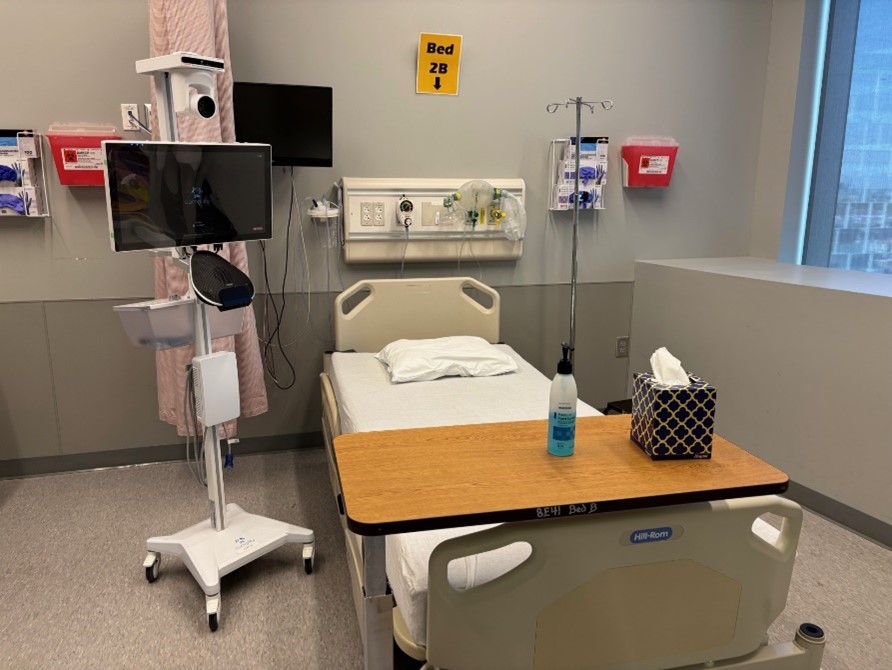
A Caregility APS250 mobile telehealth cart positioned by the patient’s bed allows remote nurses to engage with patients virtually using the Caregility iConsult application and AI-enhanced Connected Care™ platform.
Drexel prides itself on state-of-the-art simulation experiences with access to tools, applications, and workflows for healthcare delivery. As the healthcare environment continues to evolve, virtual nursing has become a critical component. Yet there has been little in the way of preparing nursing students to leverage this technology to improve patient safety and outcomes. The goal of this collaboration is to enhance the simulation environment to begin to develop competency in the interface between patients and technology. This partnership distinguishes Drexel University College of Nursing and Health Professions and Caregility in an academic-practice partnership to better prepare nurses for practice.
“This partnership exemplifies Drexel Nursing’s dedication to preparing graduates for the future of healthcare,” said Kym Montgomery, DNP, APRN, WHNP-BC, CNE, FAANP, FAAN, senior associate dean of nursing and chief nursing academic officer, College of Nursing and Health Professions at Drexel University. “By embedding virtual care technologies into simulation, we’re equipping students with real-world, hands-on experience in digital health environments. This forward-thinking approach ensures our graduates enter the workforce not only practice-ready but prepared to lead innovation in patient care.”
“This innovative partnership in the setting of simulation provides a unique opportunity to develop beginning competencies in the technology-patient interface and promotes the development of practice-ready nurses,” added Kate Morse, PhD, MSN, RN, AGACNP-Ret, assistant dean of Simulation and Innovation, College of Nursing and Health Professions at Drexel University.
Caregility will provide Drexel University with smart bedside devices and use of the Caregility Connected Care™ platform, which currently enables dozens of clinical workflows in hospitals around the world. This includes access to responsible AI technology that uses computer vision, ambient listening, and contactless sensors to give caregivers additional insight from the patient room.
“We are so happy that we can partner with Drexel University and support their nursing program to develop and enhance course content to provide nursing students with relevant training to be prepared for entering the emerging healthcare delivery environments integrating virtual nursing,” said Susan Kristiniak, DHA, MSN, RN, NEA-BC, AHN-BC, chief nursing officer at Caregility. “Digital health is permeating every aspect of care for both inpatient and outpatient settings, and nurses are our primary users of the technology to promote safe practice, quality care, and workflow efficiencies. It is vital to prepare these students for what they will undoubtedly be using upon graduation.”
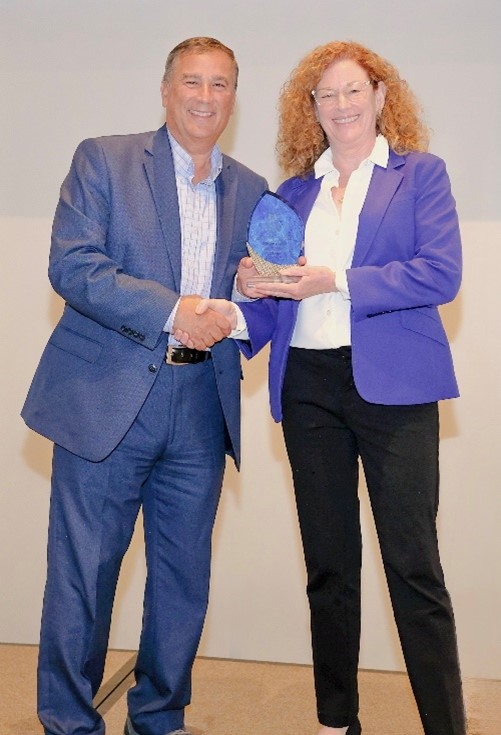
Mike Brandofino, Caregility President and COO (left), awards Kate Morse, PhD, MSN, RN, AGACNP-Ret,Assistant Dean of Simulation and Innovation, College of Nursing and Health Professions at Drexel University (right), with the Community Impact Award at the 2025 Caregility Customer Connect Summit.
Drexel University’s dedication to innovation in nursing education recently earned it the Community Impact Award at the 2025 Caregility Customer Connect Summit, honoring its leadership in integrating virtual care into clinical training. The university will commemorate the official unveiling of its new nursing simulation environment with a ribbon-cutting event on October 15.
About Caregility Caregility (www.caregility.com) is a telehealth solutions company dedicated to connecting patients and clinicians everywhere. Our Caregility Connected Care™ platform powers a full suite of clinical and operational applications, enabling care delivery across the continuum, from the hospital to the home. With secure, reliable, and scalable technology, Caregility is transforming healthcare by making virtual care a seamless extension of the care team.
About Drexel University Drexel University is a comprehensive global R1-level research university and experiential learning leader that combines academic rigor with one of the nation’s premier cooperative education programs. Drexel integrates education, scholarship, diverse partnerships, and our global community to address society’s most pressing challenges through an inclusive learning environment, immersive learning, external partnerships, transdisciplinary and applied research, and creative activity. We prepare graduates of diverse backgrounds to become purpose-driven professionals and agents for positive change.
The Sound of Safer Care: How Acoustic Sensing is Transforming Healthcare with Derek van der Vorst of Sound Intelligence
Digital Health Frontiers – Podcast Ep. 8
“With video, a virtual nurse can monitor maybe 16 patients at night. With audio, that same nurse can oversee 100 rooms – without being intrusive and while giving patients more privacy.” — Derek van der Vorst, CEO, Sound Intelligence
Derek van der Vorst CEO, Sound Intelligence
Mike Brandofino President and COO, Caregility
In this episode of Digital Health Frontiers, Caregility President & COO Mike Brandofino sits down with Derek van der Vorst, CEO of Sound Intelligence, to explore the untapped potential of audio analytics in healthcare.
While most AI innovation in hospitals has centered on cameras and visual monitoring, audio offers a powerful, scalable, and privacy-preserving way to enhance patient safety, staff well-being, and care efficiency. In this episode, Derek shares how Sound Intelligence has deployed its solution in over 15,000 patient rooms, focusing on three key areas:
Staff Safety: Detecting aggressive voices and escalating behavior to prevent workplace violence before it gets out of control.
Better Sleep: Using a “Zen Score” to measure and reduce disruptive hospital noise, improving patient recovery and satisfaction.
Better Care: Expanding monitoring capabilities so a single virtual nurse can safely oversee 100+ rooms at night without being intrusive.
Mike and Derek also discuss how acoustic monitoring complements cameras and sensors, supports nurse efficiency, and opens new possibilities for detecting medical conditions like sleep apnea or epileptic seizures. With edge-based processing and no recordings stored, this technology delivers real-time insights without compromising privacy.
Whether you’re a hospital executive, nurse leader, or innovator in virtual care, this episode shines a light on how sound can play a defining role in the future of care delivery.
Listen Here:
Read the Transcript
Welcome to Digital Health Frontiers, where we explore the cutting edge of healthcare technology, policy, and innovation, hosted by Mike Brandofino, President and COO of Caregility. In this episode Mike sits down with Derek van der Vorst, CEO of Sound Intelligence to discuss how acoustic sensing is shaping the next frontier of inpatient care. Derek shares how audio AI can detect early signs of aggression to improve staff safety, monitor hospital noise levels to support patient recovery, and ultimately help health systems create calmer, safer care environments
Mike Brandofino (Caregility President & COO): Hello, everybody. I’m Mike Brandofino, President and COO of Caregility, and welcome to Digital Health Frontiers. I’m here with one of our partners, Derek van der Vorst, CEO of Sound Intelligence. Today we’re going to talk about one of the best opportunities to add value in the inpatient setting—acoustic sensing.
Much of the AI focus today has been on cameras in the room, which are important, but audio represents a powerful new frontier. Derek, thank you for joining us.
Derek van der Vorst (Sound Intelligence CEO): Thanks for having me, Mike.
Mike: From an audio perspective, what types of things is Sound Intelligence doing in inpatient settings to help health systems?
Derek: Sound Intelligence is a Dutch company, founded in 2000, and we’ve deployed our solution in over 15,000 patient rooms in Europe. We focus on three main areas: staff safety, better sleep, and better care.
Workplace violence is a serious issue in healthcare. Nurses are 5–12 times more likely to experience workplace violence than other professionals, and surveys show safety concerns are a top reason many consider leaving. Our software detects aggressive voices—shouting, agitation, escalating emotions—and alerts nearby staff or security before situations spiral.
We also developed something called the Zen Score—Zero Excessive Noise. Noise levels in hospitals are often much higher than recommended, disrupting patient rest, recovery, and mood. By monitoring not just background noise but sudden interruptions like door slams, we help hospitals identify noisy environments and take action. This improves recovery times, patient satisfaction, and ultimately HCAHPS scores.
Mike: Many hospitals rely on panic buttons, but they’re not always enough. Audio sensing seems to offer an important augmentation.
Derek: Exactly. Panic buttons aren’t always pressed—sometimes staff can’t reach them, or patients and visitors escalate without a nurse present. Audio provides an objective, automated way to detect and escalate alerts.
Mike: I also visited some of your customers in the Netherlands, and I was struck by how scalable audio is compared to cameras.
Derek: That’s right. Audio analytics can run on existing Caregility hardware without additional equipment. It’s lightweight, edge-based, and scalable. For example, with video alone, a virtual nurse might monitor 12–16 patients at night. With audio, that same nurse can safely monitor 100 rooms, with greater privacy, since the camera only activates when triggered by sound.
Mike: A common concern with AI is data security. How does audio sensing address that?
Derek: All processing happens at the edge. No audio is recorded, and no conversations are stored or transmitted. We don’t do speech recognition for these use cases—just sound pattern analysis—so there are no privacy risks.
Mike: That’s an important distinction. There’s a difference between ambient listening (analyzing words for transcription, stress, or voice commands) and what you’re describing: sound pattern analysis without listening to words.
Mike: Initially, many of your deployments weren’t in patient rooms. How did Sound Intelligence get started in healthcare?
Derek: In the U.S., we began with security use cases—detecting aggression in emergency departments, urgent care centers, and pharmacies. Hospitals saw immediate benefits in preventing escalation, and now they’re asking to bring those capabilities into patient rooms, where cameras often aren’t used. That’s where our partnership with Caregility is so valuable.
Mike: Looking ahead three to five years, what role do you see audio playing in healthcare?
Derek: Education is the first hurdle—helping hospitals understand what’s possible. As adoption grows, we’ll move into more advanced use cases like detecting sleep apnea, epileptic seizures, or breathing patterns. Essentially, acoustic monitoring can add meaningful clinical data without invasive sensors. In the future, audio analytics will complement traditional tools like stethoscopes, helping providers diagnose more efficiently and even remotely.
Mike: That aligns with our vision at Caregility. By combining audio with other sensors—like radar, incontinence monitors, or cameras—we can help nurses work at the top of their license, saving time, improving safety, and enhancing patient care. I also saw in the Netherlands how remote monitors learned to quickly interpret sounds—even recognizing nonverbal patient communication. That’s powerful.
Derek: For hospitals new to audio, we encourage small-scale pilots—say, 10 rooms—to experience the benefits firsthand. Once they see the value, scaling becomes obvious.
Mike: I completely agree. Audio sensing brings a whole new dimension to virtual care—providing awareness of what’s happening in the room without requiring constant visual monitoring. Derek, thank you for joining us today and for your partnership.
Providers Weigh in on Digital Health Priorities and Pain Points
Roughly 3,000 healthcare stakeholders recently gathered in Chicago for the 2022 Becker’s Health IT + Digital Health + RCM Annual Meeting. Caregility was on site to join the conversation, which focused on “the future of business and clinical technologies” in healthcare. Here we distill what we learned about the health IT trends that were top of mind among health system executives in attendance.
Managing Connected Health
In an industry where the velocity of digital innovation can be difficult to keep pace with, how do healthcare CIOs and technical teams identify best-fit solutions and prioritize IT initiatives?
Clinical and IT leaders from various health systems shared their approach:
Create criteria to assess the seamlessness of integration during evaluations
Select tools that are scalable over the long term to reduce friction downstream
Consider the level of support that will be needed beyond implementation
Quantify the cost of doing things the old way to understand ROI
Health systems reported having as many as 1,500 healthcare applications in use with well over half of those apps being underutilized. Panelist David Reis, Ph.D., CIO at University of Miami Health System, shared that he works with his team to conduct portfolio rationalization monthly to help determine which apps should be optimized versus sunset. He and his team consider two important factors when making those determinations: 1) Does the app pose a cybersecurity threat? 2) Is there an alternative tool with a broader use case scenario? Risk mitigation and resource consolidation are key influencers.
Migrating to the Cloud
As tech infrastructure gets more complex, health systems are partnering with public cloud hyperscalers like AWS and Microsoft to better support burst capacity, real-time computing, and batch processing. Panelist Andrew Rosenberg, MD, EVP and CIO at Michigan Medicine, noted that as modern methods evolve it can be difficult to find experienced technical staff locally. Hyperscalers have the benefit of offering IT teams dedicated expertise in the areas of resiliency and security.
Many health systems simply “want out of the data center business,” as panelist Neal Patel, MD, CIO at Vanderbilt University Medical Center, put it. He feels his organization is better positioned to manage costs with the cloud. “It’s not cheaper, but cloud metering gives us a better process for allocating where the spend is, which allows us to make more judicious budgeting decisions.”
Integrating Telehealth
Several sessions at the event touched on lessons learned as telehealth becomes further embedded in care delivery. Health systems are leveraging telehealth to provide clinical reinforcement, take tasks off clinicians’ plates, and free up in-person engagement for patients who need it most. This includes a push to build inpatient telehealth into patient rooms to create capacity in acute settings.
“The workforce is shrinking, and we’re saying, ‘do more,’” said panelist Christine Vanzandbergen, VP of Analytics and Research at Penn Medicine. “Where can we use [telehealth] in lieu of one-on-one care? Who are the people and skills we need?”
Panelist Dave McSwain, MD, CMIO at UNC Health, made a call for reimbursement models that incentivize hybrid care that blends in-person and virtual engagement. “We need to avoid silos and stop talking about telehealth versus in-person care,” McSwain explained. “It’s integrated care versus telehealth-only care versus in-person-only care. Which is honestly probably best?”
With the relatively immature telehealth platform market largely still in growing stages, panelists encouraged health systems to:
Identify vendor partners willing to let you influence development
Field proof of concept programs to fine-tune processes and establish baselines prior to broader rollout
Be mindful of legal issues like privacy, patient consent, and clinician licensure
Establish a process for virtual care documentation to flow back into the EMR
When assessing success, at a minimum evaluate call responses, downtime, patient feedback or complaints, and utilization. Some health systems are exploring tech centers to ensure patients are comfortable with home health tools.
Where Does it Hurt?
Of the many challenges healthcare organizations are looking to overcome as part of their health IT strategy, staffing shortages were most often cited. “We have to drive an economic bottom line without burning out our team,” said panelist Anthony Moorman, Director of Solution Marketing at Qventus. This means using technology to automate manual steps wherever possible.
Speakers offered unique perspectives on ways to offset workforce hurdles. “Can we do ‘over the shoulder’ nurse guidance for new hires?” posed panelist Meghan Huffman, AVP of Telehealth Field Operations and Programs at HCA Healthcare. There was also a call for digital program reform to modernize clinical education. And as panelist Mohit Bhasin, MD, Medical Director at Sentara Heart Hospital, observed, our industry “doesn’t just lag in tech – we lag in support resources. The majority of nurses are women, yet no one has onsite daycare. We need to mimic other industries.”
Other pain points cited by panelists included:
Validation and governance of patient-generated data
The emerging need for “explained AI” or transparency in AI algorithms
The need for HIPAA, now more than 25 years old, to be rewritten for connected health to ensure we “balance privacy without stifling innovation”
Panelists also encourage peers not to get bogged down in the idea that they are behind. “Shiny object syndrome” and what is picked up by the media “makes you feel like you’re the only health system without all the stuff,” said speaker Michael Saad, SVP and CIO at University of Tennessee Medical Center. “Innovation is different for each health system. Focus on your personal business drivers.”