


Digital Health Frontiers – Podcast Ep. 7
“Every time a patient walks out of the ED due to long wait times, that’s a missed opportunity for care and a significant loss in revenue. Virtual triage helps us change that—dramatically.”
— Dr. Ed Barthell, CEO, EmOpti
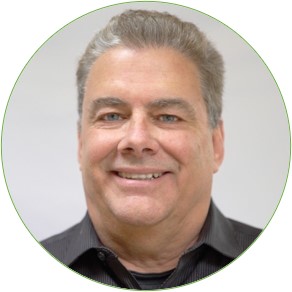
CEO,
EmOpti
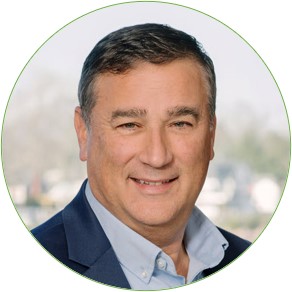
President and COO,
Caregility
Emergency departments are facing increasing pressure as patient volumes rise, staffing challenges persist, and expectations for timely care continue to grow. To meet these demands, health systems are turning to innovative virtual care models that improve efficiency and throughput across the enterprise.
In this episode of Digital Health Frontiers, Caregility President and COO Mike Brandofino sits down with EmOpti CEO Ed Barthell to discuss how EmOpti’s virtual collaboration platform enables real-time triage, dynamic clinician coverage, and more efficient ED workflows. Dr. Barthell shares insight into the role of AI, the ROI of virtual triage, and how health systems can take a crawl-walk-run approach to hybrid care transformation.
Tune in to learn how EmOpti and Caregility are partnering to deliver scalable, sustainable solutions that help health systems address today’s ED challenges—and build toward a smarter, more connected future.
Listen Here:
Read the Transcript
Welcome to Digital Health Frontiers, where we explore the cutting edge of healthcare technology, policy, and innovation, hosted by Mike Brandofino, President and COO of Caregility. In this episode Mike sits down with Ed Barthell, CEO of EmOpti to discuss challenges faced in the ED, virtual triage, and AI – and how EmOpti and Caregility work together to address these challenges
Mike Brandofino:
Hello, everybody. This is Mike Brandofino with another episode in our podcast series. Today, we’re focusing on a best-of-breed approach Caregility takes with its partners. I’m pleased to welcome Ed Barthell from EmOpti, one of our key partners in delivering solutions to our customers.
Our goal is to build on Caregility’s platform with as many workflows as possible to drive ROI and expand connected care across health systems. Ed and his team have done a great job supporting us in several customer scenarios. Ed, can you introduce yourself?
Ed Barthell:
Thanks for having me, Mike. I’m an emergency physician with over 20 years of experience in various environments. I’ve also worked in health IT, including time with Microsoft. More recently, I founded EmOpti to help improve patient flow in busy acute care settings.
Mike Brandofino:
We’ve been working together for a while, and it’s great to see customers moving forward with these innovations. Let’s start with the big picture. How is EmOpti helping health systems rethink patient flow and triage using virtual tools?
Ed Barthell:
As an ER doctor, this is personal for me. Emergency departments now see 150 million visits annually in the U.S., and that number continues to rise due to an aging population and increasing patient acuity. Emergency department crowding has been a long-standing problem—and it’s only getting worse. Staffing shortages are widespread, so we need new care models.
We created our software to improve workflows in busy care settings. On the front end, we support tele-triage. By bringing in a remote provider virtually as patients arrive, we can start tests and treatment right away. This significantly reduces wait times—from over an hour to under 10 minutes in some facilities.
Mike Brandofino:
That’s incredible.
Ed Barthell:
And we can do this with models that allow remote clinicians to serve multiple facilities simultaneously. This is more efficient and cost-effective.
Mike Brandofino:
You’ve described this before as an “Uber for healthcare.” Can you explain that?
Ed Barthell:
Sure. In typical video meetings, you know who you’re meeting with. But in healthcare, onsite providers often just need help from someone with the right expertise—they don’t care who it is. Our software enables broadcast requests to a pool of qualified people. The first available provider can respond, or the request can escalate through a chain if needed. All the complexity is managed behind the scenes.
Mike Brandofino:
So, a nurse in the ED gathers patient info, sends out a request, and any qualified clinician who’s available can pick it up?
Ed Barthell:
Exactly. This is especially valuable in multi-hospital systems and staffing groups. Our software enables flexible staffing across campuses by dynamically routing requests based on demand.
Mike Brandofino:
This addresses the challenge of covering multiple campuses or cities. Virtual clinicians can shift attention based on real-time needs.
Ed Barthell:
Right. Patient volume fluctuates throughout the day. If you treat each facility as a silo, it’s hard to adapt. Virtual clinicians can help smooth those variations by jumping in where they’re needed most.
Mike Brandofino:
Does this allow systems to leverage both internal and external resources?
Ed Barthell:
Yes. The model supports various use cases—from stroke consults by neurology groups across multiple hospitals to remote ED triage staffed by national physician groups. Remote clinicians can support onsite teams on an as-needed basis.
Mike Brandofino:
That’s where our partnership shines—Caregility provides a flexible platform, and customers choose how to staff it. Many vendors bundle provider services with their platforms, which limits choice. Our model gives systems more control.
From a technology perspective, what sets EmOpti apart? Is AI playing a role today or in future plans?
Ed Barthell:
Absolutely. AI is poised to impact all industries, especially healthcare. We’re exploring AI in clinical decision support. For example, we work with the American College of Emergency Physicians and access a large national dataset of patient encounters. AI helps detect patterns and offer reminders or guidance at the point of care—without replacing clinician judgment.
AI also supports retrospective analysis for quality improvement and research. It’s all about creating a virtuous cycle: measure, improve, repeat.
Mike Brandofino:
You’ve focused a lot on the ED. Are there other areas where this applies? I’m thinking virtual nursing or specialists spread across locations.
Ed Barthell:
Absolutely. The ED flows into inpatient units, and one underserved group is boarding patients—those waiting for inpatient beds. Virtual nursing or hospitalists can support those patients, freeing onsite staff to manage new arrivals.
You can apply this across departments—social services, discharge planning, even sitters. Rather than walking the hospital, these professionals can pop in virtually to deliver care and improve efficiency.
Mike Brandofino:
Many health systems are working to expand connected care, but CFOs want to see ROI. How do you help demonstrate value?
Ed Barthell:
Partnering with a strong platform like Caregility is key to building scalable hybrid care models. In terms of ROI:
- Virtual sitters reduce labor costs dramatically—one person can monitor 10 beds instead of one.
- Tele-triage helps prevent patient walkouts, which cost systems roughly $1,000 per occurrence. A 2% walkout rate in a 100,000-visit ED means $2 million in lost revenue annually.
- Staffing productivity improves when clinicians support multiple locations remotely.
We often see a 5–7x ROI for well-run tele-triage programs.
Mike Brandofino:
That’s compelling. I remember seeing a billboard in New Jersey advertising ED wait times. Health systems are competing for patients, and satisfaction matters. These solutions are about business performance and patient experience.
So, what advice would you give to health systems getting started? Is there a crawl-walk-run approach?
Ed Barthell:
Start with a prioritized list of use cases where hybrid care could make a difference. Get alignment between leadership and staff. These programs succeed when there’s a belief that hybrid care is the future.
Build your roadmap with ROI in mind. Change management is key—many clinicians are used to the old way of doing things. But with strong administrative support and clear benefits for patients, programs gain traction.
Mike Brandofino:
I’ve spoken with health system leaders whose biggest challenges are overnight or rural coverage—especially where contracts don’t require providers to cover off-hours. Often the barrier isn’t technology, it’s logistics and staffing policies.
Ed Barthell:
Exactly. Night shifts often have low volume, so doctors avoid them. But one physician could remotely oversee several hospitals at once, reducing the need for multiple people onsite. It’s more efficient and better for work-life balance.
Mike Brandofino:
Thanks again, Ed. This was a great conversation. I appreciate your insights and partnership, and I’m looking forward to building on this with customer-facing efforts
Subscribe to Digital Health Frontiers and listen in on your favorite podcast app here.
