Caregility Launches the “LOOP” to Help Hospitals Quantify the Value and Workforce Impact of Virtual Care
The ROI framework evaluates how AI-enabled connected care improves healthcare delivery, reduces labor pressure, and drives operational efficiency
Wall, NJ – Dec. 3, 2025 – Caregility, a global enterprise telehealth leader connecting care for patients and clinicians everywhere through innovative virtual care and AI-powered solutions, today announced the launch of the Lens on Organizational Performance, or LOOP. This breakthrough framework enables hospitals to objectively measure the effectiveness of virtual care and its contribution to smarter, more efficient workforce utilization.
A New Starting Point: Diagnostic Insight into Workforce Utilization
A core component of the LOOP is its initial diagnostics, which analyze how effectively health systems are using their clinical workforce before and after virtual care implementation. This includes evaluating changes in overtime usage, contract and agency labor dependence, overall labor expenditures, and workflow time allocation and outcomes achieved.
This diagnostic baseline allows hospitals to see not just what changed, but why, and whether virtual care is truly acting as a catalyst for more efficient, effective care delivery.
“Caregility doesn’t want to simply implement technology,” said Susan Kristiniak, DHA, MSN, RN, NEA-BC, AHN-BC, Chief Nursing Officer at Caregility. “We want to positively impact care delivery and prove it’s working. The LOOP gives hospitals the visibility to determine whether virtual care is meaningfully helping to improve patient outcomes and workforce efficiency. We built this framework so health systems can hold us accountable for results while celebrating measurable operational and clinical gains.”
Customizable Benchmarks and Point-of-Care Measurement
Every hospital’s goals, staffing model, and care environment are unique. The LOOP allows health systems to customize benchmark assumptions, identify their own program goals and KPIs, and choose which points of care they want to track—whether inpatient, observation units, bedside virtual nursing, telemetry, ICU, hospital-at-home, or other areas. This flexibility ensures that each health system measures value aligned to its own priorities.
A Customer Perspective on the Need for Ongoing Measurement
“Like many hospitals across the country, we made significant investments in virtual care to help address staffing shortages and improve the efficiency of our operations. As virtual care has become woven into more of our core workflows, we’ve reached a point where we need a reliable, ongoing way to measure and monitor its effectiveness. With the LOOP, Caregility is on the right track to give us the clarity and confidence to understand what’s working, identify where to improve quality, and support our expansion plans with real evidence behind every step.” — Kourtney Matlock, MHSA, President of Baptist Health Rehabilitation Institute and System Post Acute Services
Evidence-Based, Low-Lift, High-Impact
The process to initiate LOOP analytics requires minimal effort from hospital teams. Caregility performs the complete analysis and delivers a comprehensive ROI and outcomes report, an interactive performance dashboard, and insights into clinical quality, operational efficiency, workforce utilization, and staff satisfaction.
About Caregility Caregility is the global leader in enterprise connected care solutions, enabling organizations to deliver care anytime, anywhere. The flagship Caregility Connected Care™ platform spans inpatient, outpatient, and home settings, supporting millions of virtual care encounters annually. Caregility helps health systems accelerate digital transformation by improving clinical workflows, patient experience, and workforce efficiency through secure, scalable, and seamlessly integrated digital health solutions.
A Turning Point for Rural Health: How States, Systems, and Digital Health Leaders Are Shaping What Comes Next
Rural America is in the middle of a rare and powerful moment of alignment. For decades, rural hospitals have been fighting a multidimensional battle: shrinking workforces, widening access deserts, aging populations with rising acuity, and tightening financial margins that make every operational decision existential.
This year, that burden meets an unprecedented opportunity.
Through the One Big Beautiful Bill Act, Congress authorized the $50 billion Rural Health Transformation Program (RHTP), a five-year infusion designed to help states rewrite the future of rural care delivery. States submitted their proposals to CMS in early November, and final funding decisions are expected by December 31, despite federal shutdown delays that required HHS to call furloughed reviewers back to keep things moving.
What happens next will determine whether this becomes a once-in-a-generation modernization of rural healthcare or another fleeting cycle of short-term relief.
Rural Health Needs are Urgent and Growing
Rural communities face higher rates of chronic disease, behavioral health needs, maternal health risks, and care access barriers. The workforce picture is equally stark:
About 20% of the US population lives in rural areas, but only 9-11% of the nation’s physicians practice in rural communities. 1
74% of rural hospital CEOs report needing more RNs. 2
RN staffing density is substantially lower in rural areas versus metro areas, with roughly 65 RNs versus about 100 RNs per 10,000 patients, respectively. 3
Some analyses suggest that a single transferred patient may represent a lost contribution margin of roughly $10,000, a financial reality that compounds the pressure to maintain local access.
Against this backdrop, telehealth stands out as one of the most consistently emphasized modernization levers. In fact, “telehealth” appears 36 times in the RHTP framework, a signal that virtual care is essential to achieving the program’s goals.
Early Signals: How States Plan to Use Funding
Several states have already taken the lead in publicly sharing their RHTP applications, demonstrating an unusual level of transparency for a grant program of this scale. Details from early applications and announcements include:
Maine proposes $200,942,115 over five years to expand telehealth access statewide. 4
Washington plans to allocate $15–18 million annually toward a statewide Provider Technology Fund. 5
Maryland, one of the first states to publish its proposal, emphasizes broad community engagement and technology-enabled care expansion. 6
These early examples show a common thread: states are prioritizing digital infrastructure, care innovation, and workforce sustainability, even though the strategies vary. In a review of 25+ state RHTP announcements, roughly 90% of states included telehealth hub or network language to advance specialist access through programs like tele-stroke, tele-ED, and tele-behavioral health. Workforce reinforcement and mobile telehealth access were also highlighted as key initiatives by many states.
Some may centralize funding through statewide contracts. Others will distribute funds through competitive grants, regional collaboratives, or direct sub-awards to rural facilities. This variation matters and hospitals that prepare early will have the most to gain.
What Rural Leaders Should Be Doing Right Now
During our recent National Rural Health Association (NRHA) webinar, four national thought leaders – Connor Communications Grant Strategist Angela Connor, MA; Caregility CNO Susan Kristiniak, DHA, MSN, RN, NEA-BC, AHN-BC; Health Recovery Solutions CEO Jason Comer, JD; and Equum Medical Chief Marketing Officer Karsten Russell-Wood, MBA, MPH – outlined a clear path forward for rural health organizations preparing for RHTP funding.
Here are the key themes they shared.
1. Prepare: Understand Your State’s Plan and Build Your Own
With RHTP approvals coming soon, Connor underscored the importance of early readiness, encouraging hospitals to:
Review their state’s posted RHTP application to understand priorities, timelines, and distribution models.
Contact their State Office of Rural Health, which will be central to coordinating sub-grants.
Define strategic needs now, rather than waiting for a grant window to open.
Build programs “as if budget weren’t the constraint,” to respond quickly and convincingly.
The takeaway: When states begin awarding funds, hospitals with clear, shovel-ready initiatives will be far ahead of those still brainstorming.
2. Repair: Rebuild Workforce Capacity with Connected Care Tools
Kristiniak brought the inpatient lens to the conversation: rural workforce strain isn’t theoretical. It shows up in fall rates, throughput challenges, safety risks, burnout, and rising overtime.
She emphasized how hybrid care models such as virtual nursing, virtual observation, remote specialist consults, and AI-enabled monitoring relieve both cognitive and physical burden on bedside teams. She highlighted data points rural hospitals can expect when leveraging virtual care:
Faster admissions and discharges
Reduced overtime
Lower fall and hospital-acquired infection rates
Shorter length of stay
Better HCAHPS and discharge readiness scores
These are not abstract possibilities; they’re real outcomes already documented across community and rural hospitals using connected care models.
3. Care: Extend the Continuum Beyond the Hospital Walls
Comer spoke to the reality that modern rural care must extend beyond the inpatient setting. Longitudinal virtual care models such as Transitional Care Management, Remote Patient Monitoring, Chronic Care Management, and Advanced Primary Care Management are essential to the RHTP goals of keeping patients healthier, at home, and connected to their care teams.
He shared emerging success in areas like:
Maternal health: early detection of cardiac complications and reduced postpartum risk
Oncology: fever flagging, renal monitoring, and symptom tracking
Cardiology and endocrinology: continuous, data-driven chronic condition management
These models are reimbursable, scalable, and aligned with RHTP’s emphasis on high-quality care as close to home as possible.
4. Solve the Specialist Gap with Fractional Coverage and Rural Networks
Russell-Wood highlighted a critical reality: many rural hospitals lose patients because they lose specialists. Recruitment cycles stretch 12 months or more, and locums can cost 1.5 to 2X the cost of a permanent hire.
Fractional models for specialties such as neurology, cardiology, pulmonology, and beyond allow hospitals to “subscribe” to the exact specialist time they need. Combined with regional telehealth collaboratives, this creates:
Faster access to expertise
Reduced unnecessary transfers
Higher revenue retention
Stronger local clinical confidence
These models directly support RHTP goals around sustainability, care access, and innovative delivery.
The Bigger Picture: Rural Health Is Entering a New Era
If there is a single takeaway from the NRHA panel, it’s this:
Rural hospitals cannot succeed in isolation. This is a moment for connected strategy, connected technology, and connected care.
For many rural leaders, this is the first time in their careers that strategic vision, federal investment, workforce innovation, and community need have aligned so clearly. The organizations that use RHTP funding to build durable, tech-enabled care models rather than one-off pilots will define what rural care looks like for the next decade.
Ready to Build Your RHTP-Aligned Roadmap?
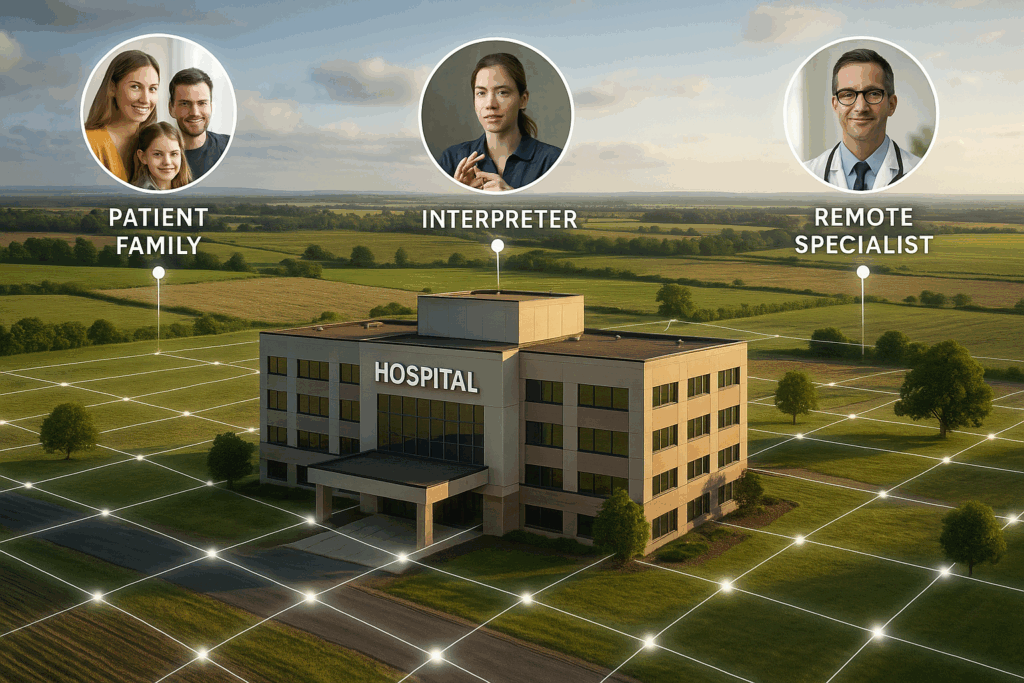
Caregility partners with rural hospitals and state agencies to design sustainable virtual care programs aligned to the five strategic pillars of RHTP, from regional telehealth hubs to support specialist access to inpatient virtual nursing and AI-assisted observation.
If you’d like to explore how connected care can support your rural hospital’s transformation strategy, set up a discovery call today.
Caregility Launches Care Square – Powering Smart Hospitals of the Future with the Industry’s Most Comprehensive Connected Care Ecosystem
Care Square’s open architecture integrates AI, virtual care, and peripheral systems and sensors to amplify clinical intelligence, collaboration, and patient engagement.
Wall Township, NJ – Nov. 20, 2025– Caregility, a global enterprise telehealth leader dedicated to connecting care for patients and clinicians everywhere through innovative virtual care and AI-powered solutions, today announced the launch of Care Square, a groundbreaking connected ecosystem designed to streamline and elevate patient care workflows and power the next generation of Smart Hospitals.
Foundational to the Caregility Connected Care™ platform, Care Square is a fully integrated ecosystem of multiple solutions, seamlessly aligned for patient-centered care. Built on years of collaboration with leading health systems, Care Square unifies dozens of best-in-breed data collection sensors and medical monitoring devices, AI automation and predictive analytics, audio and video communications, interactive smart TVs and digital whiteboards, nurse call systems, EHRs, and more. Care Square delivers the foundation for an enterprise-wide connected care platform that enhances collaboration, clinical workflows, operational efficiency, and patient experience.
The launch of Care Square marks a new phase in Caregility’s “Build on Us” initiative, a strategic program inviting partners and health systems to leverage Caregility’s open architecture to expand the digital health ecosystem and build out fully connected Smart Hospitals.
“Unintegrated or incompatible siloed applications and point solutions often slow down clinical workflows and fail to deliver improvements in patient care,” said Ron Gaboury, CEO of Caregility. “With Care Square, we’ve created a unified ecosystem that integrates virtual care, AI, digital health, and smart room innovation into one seamless platform that delivers measurable improvements in care delivery. It’s the catalyst for digital health transformation and the foundation of the smart hospital of the future.”
Reimagining the Smart Room of the Future
Care Square enables intelligent, connected patient rooms that transform care delivery. By bringing together virtual care, EHR-integrated workflows, AI-powered monitoring and sensing, and automated device management, Care Square supports:
Real-time Situational Awareness – Context-aware data flows between bedside sensors and devices and care teams, with actionable insights.
Improved Care Coordination – Connect remote and bedside care teams for elevated care delivery.
Optimized Clinical Workflows – Automate data collection and routine tasks to free up clinicians for higher-value care.
Elevated Patient Experience – Timely care delivery with personalized engagement.
“Having a partner that is dedicated to a holistic approach to digital and virtual care is critical to achieving our long-term vision for healthcare transformation,” said Jon Witenko, System Director of Digital Transformation at Lee Health. “Care Square provides the kind of integrated platform that is helping us streamline and speed up patient care delivery, optimize our clinical workflows, and deploy at scale.”
A Unified Digital Health Ecosystem
Care Square builds on Caregility’s proven track record supporting 1,100+ hospitals, 30,000+ connected devices, and 6M+ annual virtual care sessions. The platform delivers:
Best-in-Breed Partner Access – Integrated solutions from leading digital health, AI, and device innovators that streamline and accelerate clinical workflows.
Enterprise Interoperability – Deep integration with EHRs, sensors, medical devices, and smart room platforms to eliminate data silos.
Smart Hospital Enablement – A connected care infrastructure that improves clinical workflows, patient experience, and operational scalability.
Simplified Vendor Management – One platform, one contract, multiple capabilities—reducing complexity across IT and clinical operations.
Future-Ready Architecture – An open, API-first design built to integrate emerging technologies and next-generation care models.
With Care Square, Caregility sets a new standard for digital health innovation, delivering the connectivity, intelligence, and flexibility required to drive the industry’s evolution toward fully integrated Smart Hospitals and healthcare transformation.
Learn more about the Care Square integration ecosystem here. Parties interested in joining the Care Square ecosystem can learn more here.
About Caregility Caregility is the global leader in enterprise connected care solutions, enabling organizations to deliver care anytime, anywhere. The flagship Caregility Connected Care™ platform spans inpatient, outpatient, and home settings, supporting millions of virtual care encounters annually. Caregility helps health systems accelerate digital transformation by improving clinical workflows, patient experience, and workforce efficiency through secure, scalable, and seamlessly integrated digital health solutions.
See how Salem Health modernized nursing operations through a scalable Virtual Nursing program powered by Caregility’s Connected Care™ Platform.
Caregility and MOD3RN Care Partner to Modernize Healthcare Delivery in Australia
WALL, N.J. and BARANGAROO, Australia, Nov. 3, 2025 — Caregility Corporation, a global enterprise telehealth leader dedicated to connecting care for patients and clinicians everywhere through innovative virtual care and AI-powered solutions, today announced a strategic reseller partnership with MOD3RN Care, a leading Australia-based technology solutions provider. The collaboration aims to accelerate the adoption of virtual care and AI-enabled care models across Australia to strengthen clinical capacity, improve patient safety, and reduce staff burnout.
The partnership aligns with growing momentum across Australia’s public and private sectors to modernize care delivery through hybrid models that combine clinical excellence with digital efficiency. Under the agreement, MOD3RN Care will distribute Caregility’s Connected Care™ Platform and edge AI devices throughout the region, supporting hospitals and health systems as they adopt scalable, secure, virtual care programs spanning inpatient, outpatient, long-term care, and home settings.
“Australia’s health systems are facing many of the same workforce challenges the U.S. experienced during and following the pandemic,” said Nicholas Rorris, CEO of MOD3RN Care. “Caregility’s Connected Care Platform and Virtual Nursing workflows have demonstrated how technology can extend nurses’ reach, ease workloads, and deliver safer, more consistent care. Together, we’re helping Australian hospitals augment, not replace, clinicians with intelligent tools that add more care minutes to their day.”
Caregility customers have achieved measurable results after implementing virtual care models, including:
A leading health system reducing nursing turnover from 23% to 14% in one month
A 200-bed deployment earned back 780 hours for bedside staff in a single month
Another health system reducing average Length-of-Stay (LOS) by 0.7 days
The Caregility Connected Care Platform powers a full suite of clinical workflows, including Virtual Nursing, Virtual Observation, and multi-specialty Virtual Consults, using integrated edge AI devices and sensors to improve care efficiency. Deployed across more than 1,100 hospitals globally, the platform offers embedded Epic EHR integration, proactive device monitoring, remote updates, and uptime performance exceeding 99%.
“Virtual and AI-supported care models are becoming a cornerstone of modern healthcare delivery globally,” said Mike Brandofino, President and COO of Caregility. “Partnering with MOD3RN Care gives us a trusted onshore collaborator to help Australian providers tap into proven models that improve staff efficiency and patient outcomes.”
Caregility will localise hosting within Australian data centres to ensure compliance with national data sovereignty and privacy requirements. The partnership sets the stage for collaboration with leading public and private healthcare organisations as they explore new ways to support the clinical workforce through technology.
About Caregility Caregility Corporation is a global leader in enterprise telehealth, uniting patients and clinicians through secure, scalable, and AI-powered virtual care solutions. The Caregility Connected Care™ Platform supports hospitals and health systems worldwide, enabling seamless care delivery across settings, from inpatient care to hospital-at-home. Today, Caregility connects care in more than 1,100 hospitals across 85 health systems, with over 19,000 contracted bedside sensors hosting over six million virtual care sessions annually.
About Modern Care MOD3RN Care has over 65 years of combined experience delivering technology solutions to Australian businesses. With global reach and a strong local presence, MOD3RN Care helps organisations modernise infrastructure, enhance innovation, and prepare for tomorrow’s landscape. As a Platinum Distributor and Global Partner of 3verest, MOD3RN Care enables clients to realise the full potential of next-generation cloud and digital transformation solutions.
AUS Media Contact: Sharon Grant COO & Marketing Director Sharon@mod3rncare.com +61 403 678 568
Bridging Borders: Bringing Virtual Nursing Across the Globe
Digital Health Frontiers – Podcast Ep. 9
“Technology doesn’t remove empathy — it amplifies it when used right.” — Mike Brandofino, President and COO, Caregility
In this special international episode of Digital Health Frontiers, Mike Brandofino, President and COO of Caregility, sits down with Nickolas Rorris, CEO of MOD3RN Care to explore how virtual nursing and AI-powered connected care are reshaping hospital workflows across the globe.
Together, they trace the evolution of virtual nursing — from its tele-ICU beginnings in the U.S. to its growing role in Australia’s public and private health systems. The conversation highlights how AI-enabled sensing, radar-based monitoring, and contactless vitals are reshaping patient observation and empowering nurses to deliver safer, smarter care, including:
How virtual nursing eliminates “shoulder pull” distractions and restores focus to bedside care
The role of AI sensing, radar, and contactless vitals in boosting safety and efficiency
What it means to build enterprise-grade, self-healing virtual care infrastructure
How Australia can leverage U.S. hub models and Epic-integrated workflows to accelerate adoption
Tune in to hear how Caregility and MOD3RN Care are connecting clinicians, patients, and data — transforming the future of care delivery from New Jersey to New South Wales.
Watch Here:
Listen Here:
Read the Transcript
Welcome to Digital Health Frontiers, where we explore the cutting edge of healthcare technology, policy, and innovation, In this episode we go global with a spotlight on Australia, with ways that New South Wales and Queensland can prepare for the next evolution of connected, scalable care. Join Nikolas Rorris, CEO of Mod3rn Care and Mike Brandofino, President and COO of Caregility as they unpack the need for clinical workforce innovation and the power of AI-enabled virtual care in the US and abroad.
Nickolas Rorris: Welcome to the Caregility Podcast, where we explore how virtual care is transforming healthcare delivery around the world. I’m Nickolas Rorris, CEO of Mod3rn Care, the distributor of Caregility’s Connected Care solution across Australia and New Zealand. Today I’m joined by Mike Brandofino, President and COO of Caregility — the world’s leading Connected Care platform. Welcome, Mike.
Mike Brandofino: Thanks for having me, Nickolas. Glad to be here.
Nickolas Rorris: We’re going to discuss how virtual nursing is redefining hospital care and empowering nurses everywhere. Across Australia, both our public and private systems face many of the same challenges as in the U.S. — workforce shortages, rising patient demand, and the need to deliver safe, consistent care anywhere, anytime. Let’s start by setting the scene. How is virtual nursing positioned in the U.S. compared with Australia, and what differences in funding models, workforce pressures, and digital maturity shape adoption in each market?
Mike Brandofino: Virtual nursing in the U.S. really began with tele-ICU programs, which helped nurses grow comfortable with the technology. As the model expanded to other workflows, adoption accelerated. Having nurses deeply involved from the beginning was crucial. The first hire I made at Caregility was a Chief Nursing Officer, ensuring we built the platform around the nurse’s experience. Our focus has always been on helping nurses “practice at the top of their license” — dedicating more hours to direct care by removing time-consuming administrative tasks.
Nickolas Rorris: Australia’s healthcare systems share similar challenges — fewer nurses, rising complexity, and large geographic distances. Let’s talk about how Caregility supports different nursing workflows beyond basic telehealth video calls.
Mike Brandofino: Exactly. Basic video conferencing is a commodity, but Caregility’s value is in workflow design. We build tools that support real nursing use cases — from continuous observation to admissions, rounding, and discharge. For instance, if a sitter watching a fall-risk patient goes on break, the system can seamlessly transfer monitoring to another nurse without losing visibility. That kind of reliability and flexibility is what nurses need.
Nickolas Rorris: You’ve mentioned some strong outcomes — reduced discharge times, higher patient satisfaction, and even ROI for hospitals. What’s driving that?
Mike Brandofino: Virtual discharges are a great example. Virtual nurses can handle education and paperwork, freeing bedside nurses to focus on acute patients. Hospitals see faster bed turnover, improved satisfaction scores, and higher staff morale. Plus, virtual nursing extends the careers of experienced nurses who can’t work the floor anymore but still have invaluable expertise to share.
Nickolas Rorris: And continuous observation — that’s a major innovation. What AI capabilities are enhancing this?
Mike Brandofino: AI is a huge part of it. Beyond video and audio, we use ambient sensors to detect duress, aggression, or distress through tone of voice or motion. Radar devices detect falls or occupancy in bathrooms, where cameras aren’t allowed. Contactless vitals sensors can track respiration and temperature without wearables — a major benefit for elderly or culturally sensitive patients. We’re also piloting “agentic AI” — virtual assistants that can perform tasks like pain assessments automatically, further extending what nurses can do.
Nickolas Rorris: Australia’s large health systems — NSW Health, Queensland Health, and Victoria Health — as well as major private providers like Ramsay Health, Healthscope, and St. Vincent’s, are all under pressure to scale efficiently. Why is enterprise scalability so essential for virtual care platforms?
Mike Brandofino: Health systems aren’t IT companies, so reliability and simplicity are key. Our platform continuously monitors every device 24/7, allowing remote management and calibration without disrupting patient care. It’s self-healing and highly secure — DoD-certified, ISO-compliant, and remotely updatable. Some of our first installations have been running for eight years and still receive the latest firmware updates. And integration matters. Caregility was one of the first to integrate with Epic’s CAL, eCAL, and EpicTV tools. Customers can launch calls directly from Epic, receive alerts, and control cameras without switching systems.
Nickolas Rorris: That seamless integration keeps nurses focused and minimizes distractions — no switching between apps. Let’s move to geography. In Australia, our smaller population and vast distances make staff distribution a challenge. How is virtual nursing reshaping workforce models?
Mike Brandofino: In the U.S., centralized nursing hubs have become the norm. Experienced nurses in one location can support multiple hospitals or rural clinics through connected care. This approach ensures 24/7 coverage and extends reach into underserved areas. The same model can absolutely work in Australia.
Nickolas Rorris: And what about compliance and uptime in different regions?
Mike Brandofino: We’re committed to meeting local standards. Our devices are FDA Class I certified, ISO compliant, and meet HIPAA and GDPR standards. As we expand, we’ll certify to Australian data sovereignty and security requirements. Caregility’s uptime exceeds SLA targets, and we’ve completed 55 consecutive releases without interrupting service — something we’re very proud of.
Nickolas Rorris: Incredible. One of the biggest concerns for nurses here is that virtual nursing might replace bedside roles. How did U.S. hospitals address that?
Mike Brandofino: That’s a common misconception. One of our customers analyzed all nursing tasks and found they were 130% oversubscribed. Virtual nursing helps reclaim that 30% gap — by reducing documentation time and automating low-skill tasks like sitting or discharge paperwork. It’s about giving nurses back “care minutes” — more time for meaningful patient interaction. And ironically, virtual nurses often make care feel more personal. Patients report higher satisfaction because they get eye contact and undivided attention. One of my favorite stories is about a virtual nurse who, after hearing a patient receive bad news, drove to the hospital to comfort them in person. That shows it’s not about replacing nurses — it’s about empowering them.
Nickolas Rorris: That’s powerful. In Australia, we need to emphasize that this model enhances care, adding minutes back to patient time and strengthening teams.
Mike Brandofino: Exactly. Success starts with collaboration — involving nurses from the start and identifying the workflows that save the most time. Once they experience early wins like virtual discharge or mentoring, adoption spreads quickly. Every minute saved helps nurses focus on what matters most: patient care.
Nickolas Rorris: Mike, thank you for sharing these insights. For healthcare leaders across Australia and New Zealand, now is the time to explore connected care models that extend reach, improve efficiency, and enhance patient experience. To learn more, visit mod3rncare.com and join us in shaping the future of connected healthcare.
Mike Brandofino: Thanks for having me, Nickolas. Looking forward to the partnership.
Caregility, the Leader in Virtual Nursing, Launches Joint Research Initiative with Nagoya University Hospital
Exploring the Potential for AI-Enabled Virtual Care Innovation in Japanese Healthcare Settings
Wall, NJ – October 15 – Caregility Corporation, a global enterprise telehealth leader dedicated to connecting care for patients and clinicians everywhere through innovative virtual care and AI-powered solutions; Media Plus Co., Ltd., Caregility’s distributor in Japan; and Nagoya University Hospital, one of Japan’s leading medical institutions, have announced the launch of a joint research project evaluating the effectiveness and feasibility of virtual care in healthcare settings in Japan.
Japan’s healthcare system faces significant challenges, including a severe shortage of healthcare professionals and an urgent need for care model reform. Despite these issues, the adoption of technologies such as telehealth has lagged behind that of other countries.
As part of this research collaboration, Nagoya University Hospital in Showa-Ku will conduct a proof of concept using Caregility’s flagship Connected Care™ Platform to evaluate and localize the technology for Japan’s healthcare market. The hybrid care solution connects on-site medical staff with remote healthcare professionals through a secure network, enabling Virtual Nursing, Virtual Observation, remote Specialist access, and more. Installed at the patient’s bedside, the purpose-built system is equipped with advanced camera, audio, and analytics capabilities, including AI features such as computer vision and ambient listening. Caregility delivers an immersive, secure virtual presence that allows remote clinicians to see, hear, and support patients and staff as if they were in the room.
The research is expected to contribute to:
Developing and evaluating virtual care workflows tailored to the unique needs of Japanese healthcare environments
Reducing the burden on healthcare workers through more efficient nursing operations and remote support
Creating a framework to share the expertise of highly specialized professionals remotely
“To ensure the sustainability and advancement of our healthcare delivery system, the introduction of new care models is essential,” said Naoko Sugano, President of Media Plus Co., Ltd. “Our goal is not to replace the irreplaceable roles of medical and caregiving professionals, but to support and empower them through technology—such as virtual nursing—so that hospitals and care facilities in Japan can provide safe, efficient, and compassionate care.”
“Just as we’ve seen in the U.S., the introduction of virtual care programs can serve as the foundation for broader innovation in hospital settings,” said Bin Guan, Chief Innovation Officer of Caregility. “We are honored to work with Nagoya University Hospital and Media Plus to advance Japan’s digital health transformation. Together, we’re helping healthcare organizations address clinician shortages, reduce staff burden, and improve the consistency and quality of patient care.”
About Caregility Caregility (www.caregility.com) is a telehealth solutions company dedicated to connecting patients and clinicians everywhere. Our Caregility Connected Care™ platform powers a full suite of clinical and operational applications, enabling care delivery across the continuum, from the hospital to the home. With secure, reliable, and scalable technology, Caregility is transforming healthcare by making virtual care a seamless extension of the care team..
Caregility and Drexel University Announce Partnership for Virtual Nursing
The collaboration will integrate virtual care training and connected care technology into Drexel’s Nursing programs
Wall, NJ and Philadelphia (October 9, 2025) – Caregility Corporation, a global enterprise telehealth leader dedicated to connecting care for patients and clinicians everywhere through innovative virtual care and AI-powered solutions, and Drexel University’s College of Nursing and Health Professions today announced a partnership to bring the latest smart room technology and best practices into Drexel’s nursing programs to better prepare nursing students for the growing use of digital health and AI in healthcare. The programs will provide students with hands-on experience using digital health tools to simulate engaging with patients virtually. Caregility is donating equipment and use of its award-winning Caregility Connected Care™ platform to support the new programs.
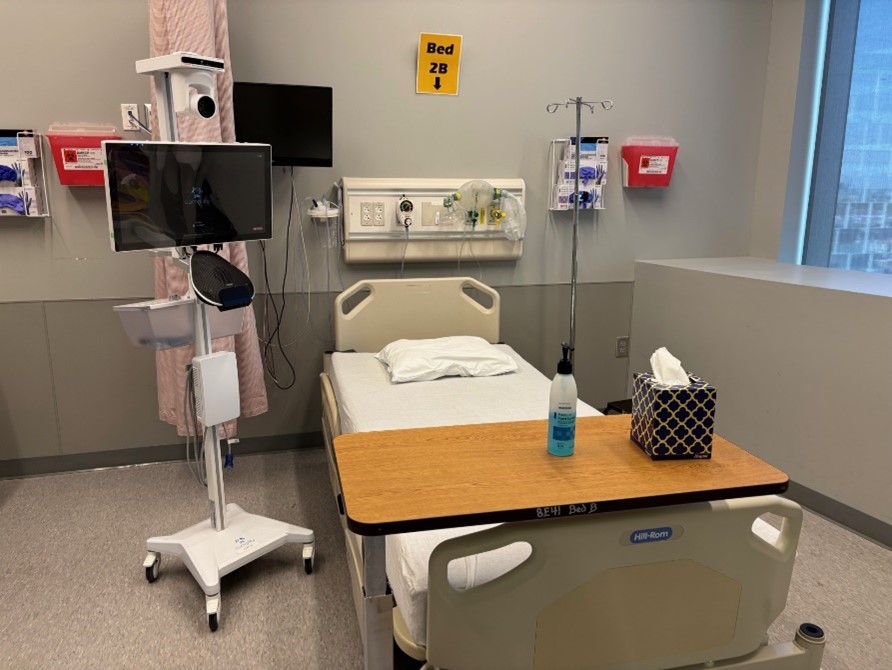
A Caregility APS250 mobile telehealth cart positioned by the patient’s bed allows remote nurses to engage with patients virtually using the Caregility iConsult application and AI-enhanced Connected Care™ platform.
Drexel prides itself on state-of-the-art simulation experiences with access to tools, applications, and workflows for healthcare delivery. As the healthcare environment continues to evolve, virtual nursing has become a critical component. Yet there has been little in the way of preparing nursing students to leverage this technology to improve patient safety and outcomes. The goal of this collaboration is to enhance the simulation environment to begin to develop competency in the interface between patients and technology. This partnership distinguishes Drexel University College of Nursing and Health Professions and Caregility in an academic-practice partnership to better prepare nurses for practice.
“This partnership exemplifies Drexel Nursing’s dedication to preparing graduates for the future of healthcare,” said Kym Montgomery, DNP, APRN, WHNP-BC, CNE, FAANP, FAAN, senior associate dean of nursing and chief nursing academic officer, College of Nursing and Health Professions at Drexel University. “By embedding virtual care technologies into simulation, we’re equipping students with real-world, hands-on experience in digital health environments. This forward-thinking approach ensures our graduates enter the workforce not only practice-ready but prepared to lead innovation in patient care.”
“This innovative partnership in the setting of simulation provides a unique opportunity to develop beginning competencies in the technology-patient interface and promotes the development of practice-ready nurses,” added Kate Morse, PhD, MSN, RN, AGACNP-Ret, assistant dean of Simulation and Innovation, College of Nursing and Health Professions at Drexel University.
Caregility will provide Drexel University with smart bedside devices and use of the Caregility Connected Care™ platform, which currently enables dozens of clinical workflows in hospitals around the world. This includes access to responsible AI technology that uses computer vision, ambient listening, and contactless sensors to give caregivers additional insight from the patient room.
“We are so happy that we can partner with Drexel University and support their nursing program to develop and enhance course content to provide nursing students with relevant training to be prepared for entering the emerging healthcare delivery environments integrating virtual nursing,” said Susan Kristiniak, DHA, MSN, RN, NEA-BC, AHN-BC, chief nursing officer at Caregility. “Digital health is permeating every aspect of care for both inpatient and outpatient settings, and nurses are our primary users of the technology to promote safe practice, quality care, and workflow efficiencies. It is vital to prepare these students for what they will undoubtedly be using upon graduation.”
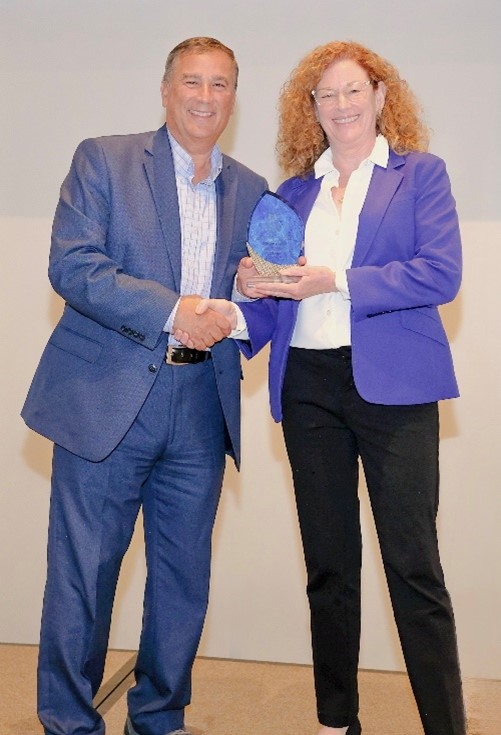
Mike Brandofino, Caregility President and COO (left), awards Kate Morse, PhD, MSN, RN, AGACNP-Ret,Assistant Dean of Simulation and Innovation, College of Nursing and Health Professions at Drexel University (right), with the Community Impact Award at the 2025 Caregility Customer Connect Summit.
Drexel University’s dedication to innovation in nursing education recently earned it the Community Impact Award at the 2025 Caregility Customer Connect Summit, honoring its leadership in integrating virtual care into clinical training. The university will commemorate the official unveiling of its new nursing simulation environment with a ribbon-cutting event on October 15.
About Caregility Caregility (www.caregility.com) is a telehealth solutions company dedicated to connecting patients and clinicians everywhere. Our Caregility Connected Care™ platform powers a full suite of clinical and operational applications, enabling care delivery across the continuum, from the hospital to the home. With secure, reliable, and scalable technology, Caregility is transforming healthcare by making virtual care a seamless extension of the care team.
About Drexel University Drexel University is a comprehensive global R1-level research university and experiential learning leader that combines academic rigor with one of the nation’s premier cooperative education programs. Drexel integrates education, scholarship, diverse partnerships, and our global community to address society’s most pressing challenges through an inclusive learning environment, immersive learning, external partnerships, transdisciplinary and applied research, and creative activity. We prepare graduates of diverse backgrounds to become purpose-driven professionals and agents for positive change.
Caregility Raises $25 Million to Drive the Future of Hospital-Based Virtual Care
Funding underscores confidence in Caregility’s AI and computer vision solutions that reduce staff burden and enhance patient care.
Wall, NJ – September 23, 2025 — Caregility Corporation, an enterprise telehealth leader dedicated to connecting care for patients and clinicians everywhere through innovative virtual care and AI-powered solutions today announced it has raised an additional $25.1 million through its Series A-2 Preferred Stock and Series C funding rounds. The round was led by Star Mountain Capital, with participation from a number of sources, including management, Dr. York Wang, PhD, initial founders, and high-net-worth healthcare-focused investors. This financing brings the total outside investment in Caregility to $92 million.
The new capital will accelerate Caregility’s growth initiatives, with a focus on leading in artificial intelligence solutions, computer vision, ambient listening, and sensor-based solutions that improve clinical workflows, reduce staff burden, and enhance patient care.
“Caregility is setting the standard for innovation in hospital-based virtual care, with groundbreaking capabilities such as edge-based Computer Vision AI and audio sensing room duress detection,” said Dr. David Shulkin, M.D., Independent Board Member of Caregility. “Caregility has expanded these advancements globally, and their platform is uniquely positioned to redefine how hospitals deliver safe, efficient, and high-quality care.”
Caregility has established itself as one of the world’s most widely adopted enterprise telehealth platforms, with more than 30,000 connected devices, over 6 million virtual sessions conducted annually, and deployments across 1,500 hospitals and 75+ health systems. The company’s modular platform supports a comprehensive range of solutions spanning virtual nursing, e-sitting, hospital-at-home, specialty consults, operating room telehealth, and more. Recognized for its reliability and flexibility, Caregility is the only organization in the space serving customers on a truly global scale, with successful deployments in markets including Asia-Pacific, Gulf Region, Middle East, and Canada, in addition to the U.S.
“This strategic investment strengthens our ability to accelerate innovation and scale more aggressively in the marketplace,” said Tod A. Nestor, Chief Financial Officer of Caregility. “With this capital, we can advance AI-driven solutions that meaningfully reduce clinician burden, improve patient outcomes, and deliver measurable and tangible value of the connected care programs deployed by our hospital partners.”
“Caregility is at a pivotal moment in its growth,” said Ron Gaboury, Chief Executive Officer of Caregility. “We’ve built a trusted foundation with many of the world’s leading hospitals and health systems, and this funding empowers us to accelerate the next wave of innovation that will shape the future of smart hospitals and connected care.”
About Caregility
Caregility (www.caregility.com) is a telehealth solutions company dedicated to connecting patients and clinicians everywhere. Our Caregility Connected Care™ platform powers a full suite of clinical and operational applications, enabling care delivery across the continuum, from the hospital to the home. With secure, reliable, and scalable technology, Caregility is transforming healthcare by making virtual care a seamless extension of the care team.
Virtual Workflows that Boost Emergency Room Throughput & Revenue
Video
On Demand Webinar: Virtual Workflows that Boost Emergency Room Throughput & Revenue
Webinar: Virtual Workflows that Boost Emergency Room Throughput & Revenue
Emergency departments are under constant pressure to balance rising patient demand, limited staff resources, and increasing financial constraints. In this webinar, industry leaders shared proven strategies for using virtual workflows to streamline throughput, improve patient experience, and strengthen the bottom line.
Now available on demand, this session hosted by Caregility CNO Susan Krisiniak and EmOpti CEO Ed Barthell explores how innovative care models and technology are transforming the way emergency teams work—helping hospitals achieve better outcomes for both patients and providers.
What You’ll Learn:
In this session, you’ll discover how to:
Improve patient experience through faster intake and reduced ED bottlenecks.
Enhance clinical efficiency with technology-enabled workflows that free up staff time.
Boost operational performance with data-driven approaches to throughput.
Strengthen your financial outcomes by capturing revenue that’s often lost in inefficient processes.
Schedule a Discovery Call to Learn More
One Platform, Endless Possibilities
With intuitive clinical applications, purpose-built endpoints, an unparalleled integration ecosystem, and edge AI capabilities, the Caregility Connected Care™ platform helps you bring patients, bedside staff, remote support, and AI together at the point of care to improve patient care and outcomes.